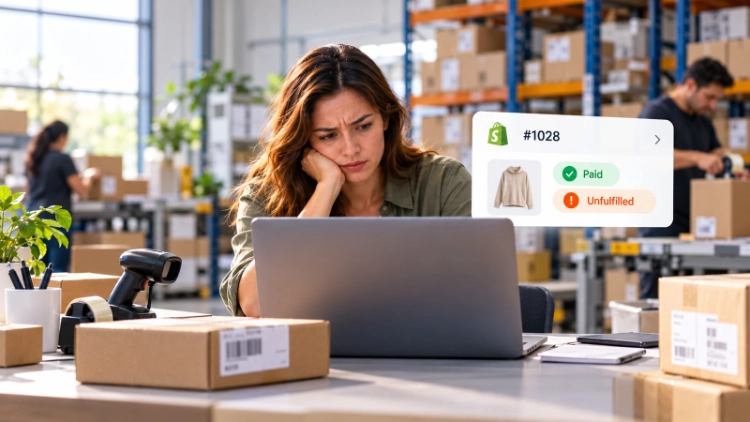
Building a Shopify storefront is only the visible part of launching a dropshipping business. The harder work happens behind the store: choosing a product direction, calculating the real delivered cost, validating a supplier, setting customer policies, and making sure an order can move from checkout to delivery without manual confusion. For merchants asking how to start Shopify dropshipping in 2026, these operating decisions matter as much as theme design or advertising.
A practical launch should therefore move in stages. Each stage should be tested before more money or traffic is committed. The process below keeps store setup simple while emphasizing supplier validation, Shopify dropshipping costs, fulfillment, and end-to-end testing.
Step 1: Define a Narrow Customer and Product Direction
Start with a specific customer problem rather than a large list of unrelated products. A focused product direction makes supplier comparison, pricing, product-page writing, and customer support easier to control.
Create a small candidate list and review each item for material, size, fragility, shipping restrictions, product claims, and likely complaint points. Competitor reviews can help reveal recurring problems such as weak packaging, misleading dimensions, missing parts, or inconsistent colors. The purpose is not to predict a winning product, but to identify what must be verified before launch.
Step 2: Calculate Shopify Dropshipping Costs Before Building the Store
Supplier price alone does not show whether a product is commercially workable. Shopify dropshipping costs should be reviewed at the delivered-order level.
For each product, calculate the supplier quote, packaging, pick-and-pack charges, international shipping, payment fees, essential Shopify or app costs, and a reasonable allowance for replacements or refunds. Customer acquisition cost also needs room in the margin once paid traffic begins.
This is more useful than comparing retail price with factory price alone. If the normal delivered order leaves too little margin after fulfillment and support costs, changing the storefront will not solve the economics.
Step 3: Validate the Supplier Before Listing Products
A supplier should be tested on product accuracy and operational capability, not only price. Send a clear brief covering the exact product, destination market, expected order pattern, packaging requirements, and preferred shipping options.
Confirm where the product is stored, how inventory changes are reported, how orders are processed, when tracking appears, and how damaged items are handled. Then place a sample order using the route intended for customers.
Inspect the product, packaging, variant accuracy, first tracking event, delivery condition, and communication quality. A sample cannot guarantee every future order, but it can expose problems before advertising spend increases.
Merchants that need supplier coordination can use a product sourcing service to organize product inquiries, quotations, and preparation for later fulfillment.
Step 4: Build the Shopify Dropshipping Store Setup
Once the product, supplier, and delivery route are credible, build the store around verified operating information. Keep the early structure simple: domain, market, currency, payment method, contact details, and clear navigation.
Shipping, returns, privacy, and terms pages should reflect the actual process that was tested. Cross-border sellers also need to review tax, customs, and legal obligations for each target market because these can affect both final cost and delivery expectations.
The Shopify dropshipping store setup should support accurate customer promises rather than compensate for unresolved supplier or logistics issues.
Step 5: Create Product Pages From Verified Details
Use the sampled product and confirmed supplier information to build the product page. Include the material, dimensions, compatibility, package contents, care instructions, limitations, and variant information customers need to make a decision.
Images should match the product being fulfilled, and claims should remain within information that can be verified. Shopify variants must also correspond to the supplier or warehouse SKU. A mismatch between the storefront variant and fulfillment SKU can create wrong-item shipments even when the order data transfers correctly.
Price the product from the delivered cost established in Step 2, leaving room for normal promotions, replacements, and customer support.
Step 6: Build the Shopify Dropshipping Fulfillment Workflow
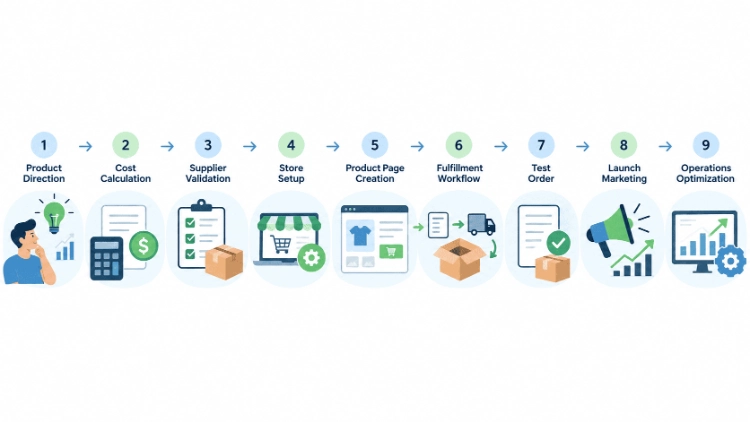
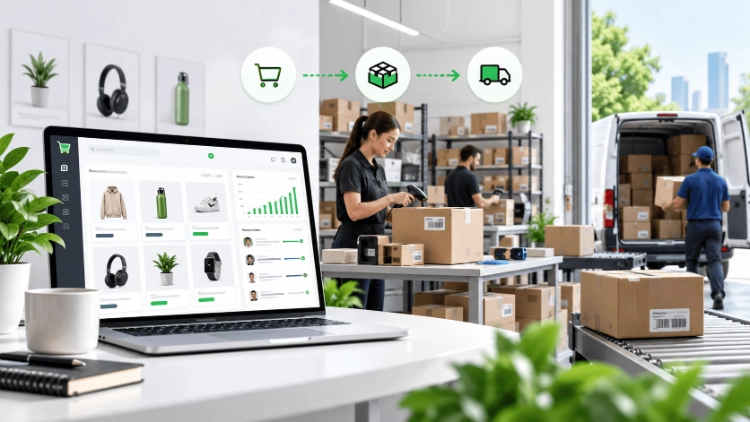
Shopify dropshipping fulfillment should be designed before the first campaign begins. The merchant needs a clear path from customer order to supplier or warehouse execution.
A practical workflow is:
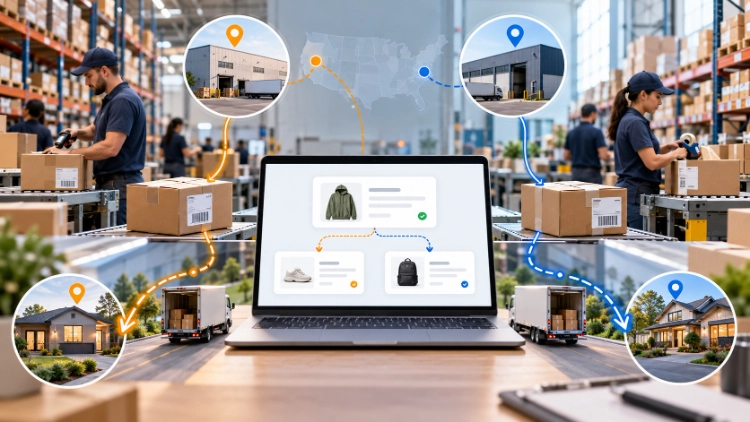
Customer order → Shopify → order transfer or sync → SKU match → supplier or warehouse → quality check → packing → shipping → tracking return.
The workflow may use an integration, a sourcing agent platform, or manual forwarding at very low volume. Whatever the method, test address transfer, SKU mapping, inventory updates, shipping selection, and tracking return.
An auto fulfillment service can reduce repeated order transfer by connecting store orders with warehouse processing and tracking workflows. Merchants that need more detail on this stage can also review Auto Fulfillment for Shopify: How Order Sync and Tracking Sync Reduce Fulfillment Bottlenecks.
The supplier or fulfillment provider may perform picking, packing, and shipping, but the store still needs accurate status information for customer service. LZ Dropshipping supports product sourcing, warehouse handling, quality control, order processing, logistics selection, and tracking for cross-border sellers that need a more organized fulfillment workflow.
Step 7: Run an End-to-End Shopify Dropshipping Test Order
Before sending significant traffic to the store, place a live test order through the same path a customer will use. A Shopify dropshipping test order should cover checkout, payment, order confirmation, transfer to fulfillment, SKU selection, warehouse processing, tracking, delivery, and the refund or cancellation process.
Review the experience on both desktop and mobile. Confirm that the customer can find the delivery estimate and return policy easily. If standard packaging is used, do not promise a branded unboxing. If tracking normally takes time to update, the policy should explain that expectation.
A launch should move forward only after critical gaps in the order-to-delivery path have been resolved.
Step 8: Launch Through One Primary Marketing Channel
Choose one primary acquisition channel based on the product and target customer. This may be short-form video, creator outreach, search content, an existing audience, or controlled paid advertising.
The objective of the first launch is not maximum traffic. It is to collect usable evidence. Monitor product-page visits, add-to-cart activity, checkout completion, cancellations, support questions, delivered orders, refunds, and margin after fulfillment costs.
Early results should guide product-page changes, delivery communication, pricing, and supplier discussions before the business expands into additional channels.
Step 9: Stabilize Operations Before Scaling the Catalog
Review the first delivered orders for recurring friction. Repeated product questions may indicate weak page information. Wrong variants point to SKU mapping. Damage may require better packaging or stronger quality checks. Delivery questions may indicate that estimates or tracking communication need improvement.
Fix the pattern before adding more products or increasing advertising. Scaling should follow a stable process rather than force an untested workflow to handle more volume.
As order volume grows, merchants should also review whether the current supplier, warehouse, tracking process, and logistics routes still fit the operation rather than assuming a workflow designed for initial testing will remain suitable at a larger scale.
Shopify Dropshipping Launch Checklist
Before launch, confirm that the product has been sampled, the delivered margin has been calculated, supplier and shipping terms have been verified, store policies are complete, variants match fulfillment SKUs, the fulfillment path has been tested, tracking returns correctly, and a support process exists for exceptions.
Conclusion
Learning how to start Shopify dropshipping is less about opening a storefront and more about validating the operating chain behind it. Define a focused product direction, calculate the delivered cost, test the supplier, build accurate product pages, connect Shopify dropshipping fulfillment, and complete an end-to-end order before scaling traffic.
For merchants with a defined product and target market, review your sourcing and fulfillment requirements with LZ before expanding the catalog or increasing order volume.
FAQ
How much does Shopify dropshipping cost to start?
There is no single startup figure. Costs depend on the Shopify plan, domain, samples, apps, payment fees, product cost, fulfillment, shipping, marketing, and expected support or replacement expense. The useful number is the total cost required to test the store and complete real customer orders.
Do you need inventory to start Shopify dropshipping?
Not necessarily. New products can be sourced after orders are received if the supplier and delivery timeline support that model. Stable products may later justify a small inventory buffer to reduce replenishment delays.
Should you order a sample before launching?
Yes, when practical. A sample helps verify product accuracy, packaging, shipping performance, tracking, and the customer delivery experience before larger marketing spend is committed.