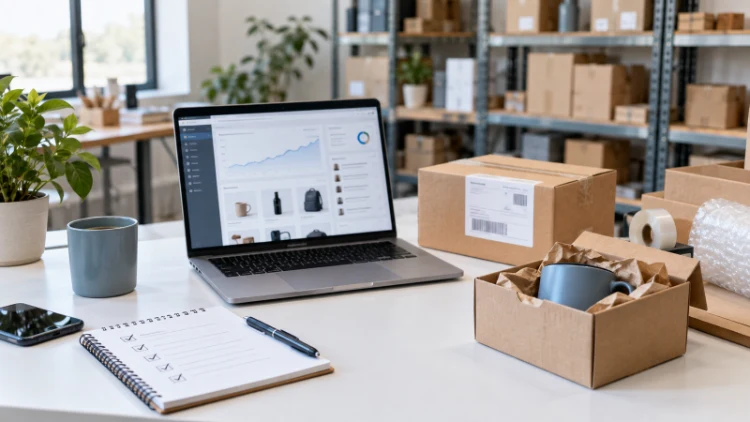

Dropshipping reste attrayant en 2026 puisqu'il permet aux vendeurs de lancer des boutiques en ligne sans garder des stocks à portée de main. Cependant, l’approche est devenue beaucoup plus difficile et les erreurs mineures dans le choix des fournisseurs, l’étude des produits, l’établissement des prix ou la gestion des besoins des clients peuvent bientôt nuire aux bénéfices et à la fiabilité.
Comprendre le modèle d'affaires moderne du dropshipping
La configuration actuelle du dropshipping s’est transformée en un réseau intelligent alimenté par la technologie et l’expédition mondiale. Il offre aux débutants d'affaires un moyen facile de faire des ventes en ligne avec de faibles chances de perte, tout en mettant l'accent sur les faits, les outils automatiques et la satisfaction des acheteurs.
Les fondamentaux des opérations de dropshipping
Dropshipping sert comme une méthode simple d'expédition au détail où les vendeurs sautent stocker des marchandises en stock. Quand un acheteur commande quelque chose en ligne, le vendeur achète l'article directement auprès du fournisseur, et ce fournisseur l'envoie directement à l'acheteur. Cette configuration diffère des façons de vente au détail de l'ancienne école qui exigent des dépenses anticipées sur les biens et les espaces de stockage.
Les aides d'expédition en ligne occupent une place importante dans ce cadre en s'occupant du transport, du stockage et des contrôles de stock à la minute. Les principaux acteurs - fournisseurs, vendeurs et acheteurs - créent une chaîne liée. Chacun dépend de la communication numérique et du partage transparent des données pour un flux de travail facile.
Comment a évolué le modèle moderne
L’ancien dropshipping s’appuyait beaucoup sur les tâches manuelles et les petits groupes de fournisseurs. Maintenant, l’installation utilise des évaluations basées sur l’IA pour deviner la demande et l’aide automatique pour les acheteurs. Alors que les besoins du marché augmentent fortement, un groupe de programmes liés faciles à manipuler joue un rôle clé. Le système de dropshipping vise à un contrôle de service complet pour le dropshipping, en aidant les vendeurs en ligne transfrontaliers à la maison et à l'étranger à gérer les tâches d'exécution telles que l'achat, le stockage, l'emballage, le transport, le stockage et plus encore pour réaliser un travail basé sur les faits.
Aujourd’hui, la création d’une marque est devenue essentielle. Les acheteurs veulent des looks stables dans les boîtes, les discussions et les moments après-achat. Les vendeurs gagnants investissent maintenant de l'argent dans des histoires et des designs de configuration utilisateur pour différer des magasins ordinaires.
Erreurs courantes dans la sélection des produits

Choisir les meilleurs articles reste une clé principale pour les victoires du dropshipping. Beaucoup de nouveaux gens gâchent ici à cause de contrôles faibles ou de mauvaise gestion du fournisseur.
Se fier à des niches trop saturées
Entrer dans des spots avec trop de rivalité provoque souvent des combats de prix et de minuscules marges de gain. Les débutants d'affaires doivent utiliser des aides comme Google Trends ou des sites d'évaluation spot pour repérer les chances croissantes au lieu de poursuivre des articles populaires. Les choix basés sur les faits assurent des différences durables via des groupes spéciaux ou non satisfaits qui correspondent aux besoins exacts de la foule.
Ignorer la qualité des produits et la fiabilité des fournisseurs
Sauter les contrôles de qualité peut gravement nuire à une marque. Pour s'assurer que les articles expédiés restent bons, les aides de dropshipping de stockage en nuage tout-en-un ajoutent souvent des critiques de qualité des articles et des séances photo. Les vendeurs devraient demander des pièces d'essai avant de se coller aux fournisseurs et continuer à surveiller les résultats via les délais d'envoi et les commentaires des acheteurs. La mise en place de contrôles réguliers ou d'évaluations externes, même lorsque l'expédition est remise, aide à maintenir l'uniformité dans chaque envoi.
Erreurs de prix qui nuisent à la rentabilité
Les plans de tarification déterminent si votre travail se renforce ou tombe en dessous des coûts de fonctionnement.
Fixer les prix sans tenir compte de tous les coûts
Beaucoup de nouvelles personnes manquent des dépenses cachées comme les frais de vente, les frais de livraison supplémentaires, les droits ou les retours. L'utilisation d'outils de pointe assure la bonne comptabilité des coûts avant de fixer les prix en magasin. Garder les coûts bas mais considérés comme valant la peine est important; Les acheteurs paient souvent un supplément pour une aide constante ou des apparences supérieures si elles sont soutenues par le travail de marque.
Concurrence uniquement à bas prix
Un prix trop bas peut attirer des achats rapides, mais élimine des gains réguliers. Plutôt que de pousser les rivaux à la baisse, visez à augmenter la valeur perçue via des pièces de marque solides comme des boîtes personnalisées ou des plans de récompense. Les systèmes de prix changeants peuvent ajuster les taux par eux-mêmes en fonction des changements de besoins ou des modèles basés sur le temps.
Erreurs de marketing dans les entreprises de dropshipping
Sans de bons plans de promotion adaptés aux foules ciblées, même les articles à prix raisonnable peuvent manquer de transformer les visiteurs du site en payeurs.
Negliger la recherche sur le public cible
Connaître vos acheteurs constitue la base des victoires de campagne. La division de la foule permet aux promoteurs de façonner des messages qui touchent les sentiments avec des groupes ou des likes définis. Les aides d'évaluation montrent les habitudes d'action des acheteurs, telles que les taux d'achat ou les chemins d'achat, qui guident les objectifs publicitaires.
Surdépendance à la publicité payante seule
Les promotions payantes donnent des vues rapides mais peuvent’ maintenir la croissance par eux-mêmes. Les mélanger avec des moyens de promotion naturels - ajustements de recherche sur le site, rédaction de messages et liens de personnes clés - renforce la puissance de la marque. Vérifier les rendements sur tous les chemins aide à diviser bien les fonds tout en repérant quels lecteurs apportent des achats stables sur des périodes.
Inefficiences opérationnelles qui affectent l’expérience client
Les lacunes de travail apparaissent souvent lorsque les numéros de commandes augmentent rapidement sans correspondance correcte entre les configurations.
Une mauvaise synchronisation des stocks avec les fournisseurs
Les décalages de stock entre les listes de magasins et les bases de fournisseurs provoquent des commandes abandonnées ou des envois tardifs. LZ DropshippingLe stockage cloud peut aider à résoudre ce problème. Les vendeurs envoient simplement leurs articles dans le stockage cloud, et le dropshipping peut se produire à tout moment, n'importe où en fonction des commandes. Cela réduit beaucoup le stress des stocks et augmente la vitesse de traitement des commandes.
Les aides de suivi en direct des services d'expédition en ligne réduisent ces risques en mettant à jour le stock immédiatement sur de nombreux sites. Pendant ce temps, une communication ouverte sur les niveaux de stock et des mises à jour rapides sur les retards aident à renforcer la confiance des acheteurs et à réduire la frustration des temps d'attente inattendus.
Communication inadéquate sur le suivi des commandes et l'exécution
Les nouvelles de suivi non claires dérangent souvent les acheteurs qui recherchent des vues claires après les chèques de paie. Les alertes automatiques liées aux systèmes de relations acheteurs informent les acheteurs sur l'envoi de progrès et réduisent les demandes d'aide. Des partenaires de transport solides veillent également à ce que les expéditions soient effectuées à temps, ce qui représente une grande partie des choix de rachat.
Les négligences du service à la clientèle dans les entreprises de dropshipping
Le maintien des acheteurs dépend beaucoup de pourparlers rapides après l’achat, pas seulement des discussions avant la vente.
Ignorer les besoins de soutien post-achat
Les pourparlers après-vente renforcent la confiance de la marque en montrant soin aux offres passées. Faire face à des retours de monnaie ou des swaps montre rapidement des moyens professionnels qui poussent les habitudes d'achat. Les outils de relations avec les acheteurs aident les enregistrements automatiques tout en gardant des conversations personnalisées avec chaque partie de la foule.
L’incapacité de construire des relations clients à long terme
Ne cibler que des ventes rapides nuit à la valeur de vie du client (LTV). Pousser les cycles de commentaires ne améliore pas seulement les offres à venir, mais crée également des groupes autour de votre look de marque. Les promotions par courrier électronique avec des offres spéciales ou des messages d'apprentissage développent des liens stables au fil du temps.
Ajustements stratégiques pour une croissance durable dans le dropshipping
Le travail durable dans le dropshipping nécessite des ajustements continus conduits par des faits d'examen et une poussée constante de la marque sur tous les points de contact.
Implementation de l’analyse des données pour la prise de décision
Suivant les taux d'achat, les pièces déposées dans le panier, les valeurs normales de commande (AOV) et le LTV donnent des mesures pour prendre des faits sur ce qui pousse la croissance de l'argent. Essayer de nouvelles idées par le biais de tests divisés avant d'augmenter réduit le risque, montrant tout en améliorant l'objectif de la campagne sur la base de résultats vérifiés, pas de devines.
Pour les entreprises qui veulent de meilleures compétences automatiques dans leur flux d'expédition, LZ Dropshipping offre des solutions liées mélangeant le contrôle des stocks vivants avec des outils d'évaluation basés sur l'IA conçus uniquement pour les dropshippers du monde entier.
Renforcer l’identité de marque sur un marché concurrentiel
La différence commence par le racontement d’histoires qui relie les sentiments aux foules par le biais de la réalité et des correspondances visuelles sur des chemins, du look du site aux styles de boîte. Travailler avec des personnes clés adaptées à votre lieu augmente naturellement la portée tout en soutenant la confiance parmi les acheteurs potentiels désireux de valeurs ou de modes de vie. Pour cela, vous pouvez directement choisir le branding personnalisé service de LZ Dropshipping.
FAQ (questions fréquentes)
Q1: Qu'est-ce qui différencie le dropshipping du commerce au détail traditionnel?
A1: Dropshipping est une méthode d'exécution au détail où les commerçants ne’ t besoin de stocker l'inventaire des produits. Cela élimine les coûts d'entreposage puisque les fournisseurs gèrent l'expédition directe après chaque vente en ligne.
Q2: Comment puis-je éviter les erreurs courantes lors du choix des fournisseurs?
A2 : Évaluez toujours les fournisseurs en fonction de mesures de fiabilité telles que la vitesse de livraison, l’efficacité de la gestion des retours et les évaluations vérifiées avant de les intégrer dans les systèmes back-end de votre magasin pour une exécution de commande transparente à l’aide de plateformes comme LZ Dropshipping.
Q3: Pourquoi le branding est-il si important dans le dropshipping moderne?
A3: La marque crée une différenciation au sein de marchés concurrentiels dominés par des produits similaires; Il améliore la valeur perçue à travers des éléments de conception cohérents qui favorisent des connexions émotionnelles menant à une fidélité à long terme plutôt que des achats ponctuels.