TikTok Shipping, Seller Shipping, and FBT can all work, but they are not built for the same order flow. They also give sellers very different levels of control. For B2B buyers, distributors, brand owners, and project teams, the real question is whether the shipping model can support supplier control, batch planning, packaging, tracking, and after-sales work when orders begin to grow.
What Do TikTok Shipping, Seller Shipping, and FBT Mean?
TikTok Shipping
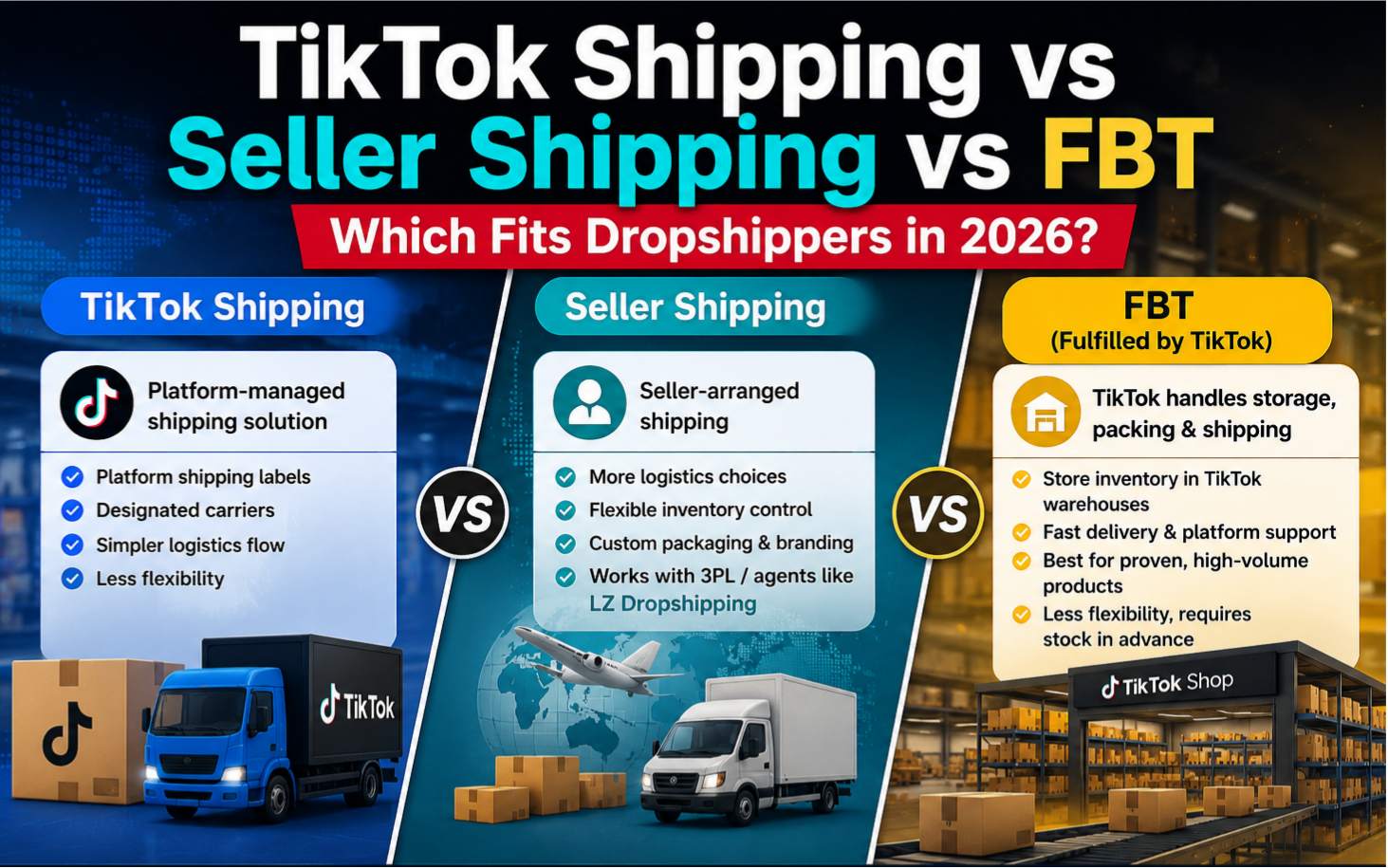
TikTok Shipping usually means the seller uses TikTok’s shipping arrangement or approved shipping workflow for eligible orders. The platform may provide shipping labels, carrier options, or a set process that sellers need to follow. This can make shipping easier when orders are simple and local.
For B2B sellers, the limitation is flexibility. If an order needs special packing, mixed products, extra documents, or a set delivery route, TikTok Shipping may not fit well.
FBT
FBT means Fulfilled by TikTok. In this model, sellers place stock into TikTok’s fulfillment system, and TikTok-side warehouse service handles storage, picking, packing, and shipping for eligible products.
FBT can be useful when a product already has stable sales and the seller is ready to prepare inventory. But for traditional dropshipping, where sellers test products first and purchase after orders come in, FBT is not usually the first choice. It is closer to a warehouse stock model than a light-inventory dropshipping model.
Seller Shipping
Seller Shipping means the seller arranges fulfillment outside the platform’s own warehouse model. The seller may ship from a factory, private warehouse, 3PL warehouse, overseas warehouse, or a dropshipping fulfillment partner.
This is where LZ Dropshipping fits more naturally. It works closer to Seller Shipping because it can help sellers handle product sourcing, quality checks, order fulfillment, logistics selection, tracking updates, and custom branding. For distributors or brand owners that need control over suppliers and packaging, this model leaves more room to manage real project needs.
How Are These Three Options Different?
These shipping options differ mainly in inventory planning, logistics control, and responsibility. Buyers should not choose based on the name alone.
Inventory Control
TikTok Shipping and Seller Shipping can be more flexible for sellers who do not want to stock large quantities first. FBT usually requires sellers to prepare goods and send them into the fulfillment system earlier.
For B2B procurement, this matters. A distributor testing several new SKUs may not want to place stock in a warehouse before seeing demand. A brand owner running a confirmed product may feel differently. If the product has steady sales, FBT may help with speed. If the product is still being tested, Seller Shipping often gives more room.
Logistics Control
Seller Shipping gives the seller more control over route choice. This matters when products ship to different markets, have different weights, or need different delivery speeds. A small fashion accessory, a consumer electronics accessory, and a home improvement tool may not need the same route. LZ Dropshipping can support this kind of flexible logistics work, with routes chosen by destination, cost, time, and product type.
Tracking and After-Sales Responsibility
No matter which model a seller uses, tracking and after-sales problems still affect the store. Buyers will not care whether the problem came from the platform, warehouse, carrier, or supplier. They only see late delivery, unclear tracking, missing parts, or damaged packing.
So buyers should check who handles tracking updates, who replies when a parcel is delayed, and who takes responsibility if the wrong item is shipped. This is often where Seller Shipping with a reliable fulfillment partner becomes practical.
Why Seller Shipping Often Fits Dropshippers Better
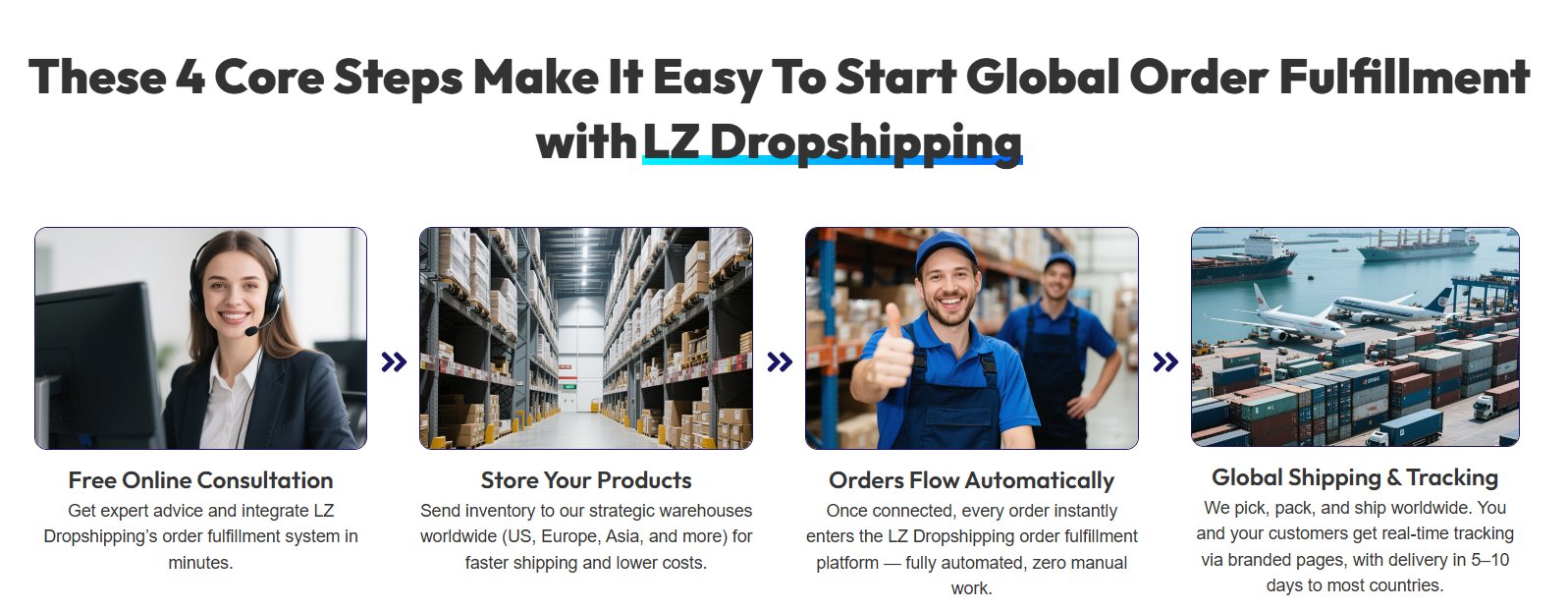
Seller Shipping is usually more suitable for dropshippers because it does not force every product into a stock-first model. Many dropshipping projects start with product testing, small batches, mixed SKUs, and changing demand. A rigid fulfillment model can slow that down.
For B2B buyers, Seller Shipping also makes supplier selection easier to control. They can check product quality before shipping, request special packaging, choose a suitable route, and adjust order handling when volume changes.
LZ Dropshipping is worth considering here. Its value is practical: product sourcing, order handling, quality inspection, auto fulfillment, tracking, and custom branding in one workflow.
When Does TikTok Shipping Make Sense?
TikTok Shipping can make sense when the seller’s products are simple, the destination market is supported, and the order process stays within TikTok Shop. It may also suit sellers who want to reduce some carrier selection work.
For B2B sellers, it is less ideal when orders need extra control. A project buyer may need combined shipment, serial numbers, batch labels, customized inserts, or a set delivery route for a regional distributor. In these cases, Seller Shipping is often easier to adjust.
When Is FBT Better for Dropshipping Sellers?
FBT can work well when a product is already proven and the seller is comfortable preparing inventory. It is more suitable for standard, light, easy-to-store products with a clear sales pattern.
But FBT is not the same as normal dropshipping. If the seller has not tested the product yet, or the MOQ is uncertain, sending stock into FBT may create inventory pressure. This is why FBT is often better after product validation, not at the first test stage.
What Should B2B Buyers Check Before Choosing a Fulfillment Partner?
Product Sourcing and MOQ
Check whether the partner can source the product quickly, confirm stock, and support small trial orders before larger batch purchasing. MOQ matters because many B2B buyers want to test demand first. A supplier that only accepts large orders may not suit early TikTok Shop testing.
Product Parameters and Quality Checks
Before shipping, buyers should confirm size, material, color, plug type, voltage, accessories, packaging, and required certificates. This is especially important for electronics, LED lighting, home tools, and products used in projects. LZ Dropshipping’s quality check support can help reduce wrong-item and defect issues before parcels leave the warehouse.
Custom Packaging and Branding
Brand owners may need logo labels, thank-you cards, product inserts, neutral packing, or custom packaging. This is easier under Seller Shipping because the seller can work with a fulfillment partner before orders go out. For many B2B buyers, packaging affects return rates, buyer trust, and resale presentation.
Tracking, Maintenance, and After-Sales
Ask whether tracking can update clearly and whether someone can respond when parcels are delayed. For products that need installation, use instructions, replacement parts, or maintenance support, the fulfillment partner should help collect the right product details and pass them to the buyer.
Final Suggestion for Dropshippers in 2026
For most dropshippers, Seller Shipping is the more flexible starting point. It suits product testing, mixed SKUs, small batches, custom packaging, and supplier-side quality checks. TikTok Shipping may work for simple orders inside the platform’s flow, while FBT is better for stable products that already justify advance stock.
For B2B buyers, the best choice is not always the fastest-looking option. The better choice is the one that protects product accuracy, dispatch time, tracking, packaging, and after-sales support. If the project needs flexible sourcing and controlled fulfillment, working with LZ Dropshipping under Seller Shipping is usually more practical than forcing every order into FBT from the beginning.
FAQ
Q1: What should buyers check before choosing Seller Shipping?
A1: Buyers should check sourcing speed, stock status, MOQ, dispatch time, logistics routes, and tracking stability. If the supplier cannot confirm these points, the order may look fine at first but run into problems once volume grows.
Q2: What product parameters matter most before shipping?
A2: Size, weight, material, color, voltage, plug type, accessories, certificates, and packaging details should be checked. For products such as LED lighting solutions, electronics accessories, or home improvement tools, these details affect returns, installation, and customer complaints.
Q3: Can dropshippers request custom packaging?
A3: Yes, custom packaging is easier under Seller Shipping when the seller works with a fulfillment partner such as LZ Dropshipping. Buyers can ask for logo labels, inserts, thank-you cards, neutral boxes, or other packing details depending on order volume and product type.
Q4: How should buyers handle MOQ, installation, maintenance, and after-sales?
A4: MOQ depends on the product, supplier, packaging request, and whether the order is for testing or batch purchase. For products that need installation instructions or long-term use support, buyers should also confirm spare parts, tracking records, missing-part handling, and after-sales response before scaling orders.