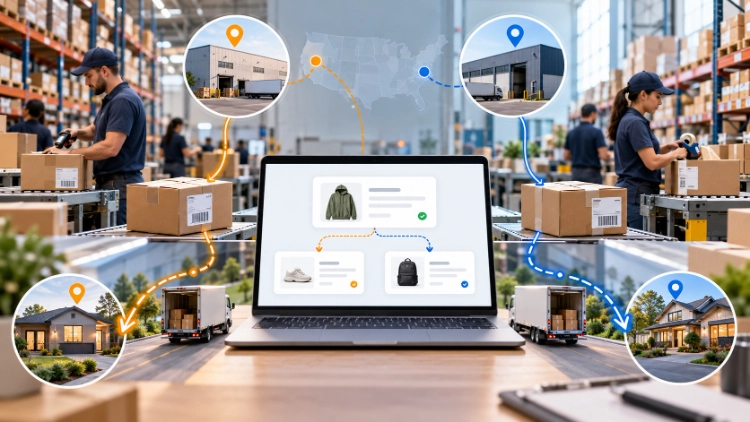
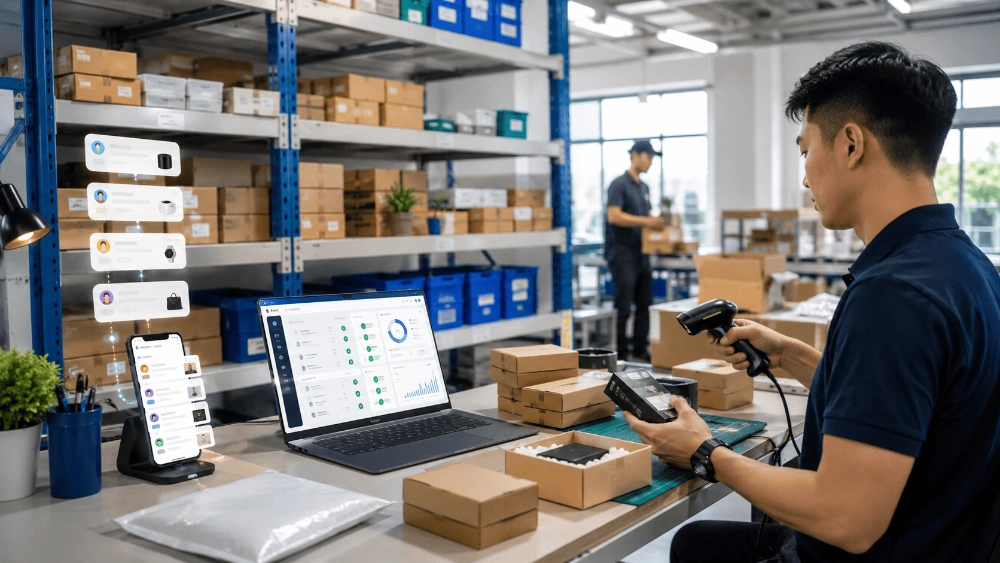
Un producto puede permanecer inactivo durante días y luego generar un aumento drástico en los pedidos tras el éxito de un vídeo de un creador. Esta volatilidad dificulta la toma de decisiones sobre el inventario: comprar demasiado pronto inmoviliza capital en un producto sin comprobar su eficacia, mientras que comprar demasiado tarde puede dejar el almacén a la espera de existencias del proveedor cuando los pedidos de los clientes ya están vencidos.
En el dropshipping de tiendas de TikTok, el objetivo no es eliminar el inventario ni maximizarlo, sino ubicar la cantidad adecuada en la etapa correcta de validación del producto. Un nuevo SKU puede adquirirse solo después de recibir los pedidos. Un SKU estable puede justificar un pequeño stock de reserva que permita una gestión de pedidos más rápida sin convertir el negocio en un modelo tradicional de inventario a granel. La decisión debe considerar la consistencia de la demanda, el tiempo de entrega del proveedor, el riesgo de calidad, la velocidad de reposición y el capital de trabajo.
Por qué TikTok Shop cambia la decisión sobre el inventario
La demanda en el comercio social puede ser más rápida que en un ciclo de reposición convencional. Por lo tanto, los equipos de compras necesitan un modelo que pueda absorber periodos de baja actividad y picos de ventas puntuales. Una buena gestión de inventario para dropshipping separa los productos por etapa comercial en lugar de aplicar la misma regla de almacenamiento a cada SKU, mercado o campaña.
La demanda viral puede superar el tiempo de entrega del proveedor.
El modelo de abastecimiento por pedido funciona cuando los proveedores pueden confirmar el stock, trasladar los productos al almacén y completar la inspección antes de que se produzca el envío. El riesgo aumenta cuando los pedidos crecen más rápido que en ese orden.
Cada pedido puede estar sujeto a confirmación del proveedor, transferencia interna, recepción en almacén y controles de calidad. La falta de existencias de alguna variante puede afectar solo a una talla o color, lo que genera retrasos operativos.
Aquí es donde el dropshipping en TikTok requiere una mayor coordinación entre la actividad de ventas y la disponibilidad de los proveedores. El aumento de pedidos debe activar controles sobre el stock disponible, el tiempo de reposición y el próximo punto de compra antes de que las campañas continúen con la misma intensidad.
El exceso de existencias crea una restricción diferente.
Mantener un mayor inventario puede acortar el tiempo de entrega, pero traslada el riesgo al flujo de caja y al stock no vendido. Un producto que tuvo un buen desempeño durante una semana puede perder demanda debido al agotamiento creativo o a los cambios estacionales.
Para las pruebas iniciales, comprar una gran cantidad vincula el capital al inventario antes de que se haya demostrado la demanda recurrente.
Por lo tanto, las estrategias de escalabilidad del dropshipping deben distinguir entre un pico temporal de ventas y un patrón de ventas repetible. El stock de reserva debe garantizar la continuidad del suministro en lugar de especular sobre la demanda futura.
Cuando el abastecimiento por pedido sigue teniendo sentido
La búsqueda de proveedores después de que el cliente realiza el pedido sigue siendo útil cuando la demanda es incierta y la cadena de suministro puede responder dentro del plazo operativo requerido. Esta etapa reduce la exposición al riesgo financiero y permite a los equipos de compras probar varios productos sin comprometerse con cantidades que quizás nunca se vendan.
Las pruebas de nuevos productos deberían ser sencillas.
Un producto nuevo tiene un historial de ventas limitado, por lo que el primer objetivo es la validación. Los vendedores deben confirmar si la oferta se concreta, si el producto físico coincide con la descripción, si el proveedor puede mantener la calidad y si la ruta de envío es viable.
En esta etapa, el dropshipping de tiendas de TikTok puede mantenerse cerca del modelo basado en pedidos: el cliente compra, se consigue el producto, el almacén lo recibe y lo verifica, y el paquete se prepara para el envío. Esto mantiene baja la exposición al inventario a la vez que se conserva la inspección del almacén antes del envío.
El equipo de compras debe confirmar el stock del proveedor antes de aumentar la promoción. Las roturas de stock repetidas generan cancelaciones evitables y trabajo de soporte.
Los pedidos diarios bajos o irregulares rara vez necesitan existencias de reserva.
Los productos con demanda intermitente quizás no justifiquen la compra anticipada. Dos pedidos el lunes, ninguno el martes y uno más adelante en la semana generalmente se pueden gestionar mediante el abastecimiento habitual si el plazo de entrega del proveedor se mantiene predecible.
A servicio de abastecimiento de productos Resulta más útil cuando el vendedor necesita cotizaciones más rápidas, coordinación con proveedores, confirmación de productos y un proceso estable desde la compra hasta la entrega. LZ considera la calidad del producto, la fiabilidad de la entrega, la velocidad de envío y la capacidad de respuesta de los proveedores, en lugar de seleccionarlos únicamente por el precio unitario más bajo.
Para los artículos de bajo volumen, esto permite al vendedor mantener la flexibilidad sin crear inventario en el almacén que no tenga un patrón de rotación claro.
Cuando el sistema de pre-venta empieza a tener más sentido
La transición al inventario previo debe basarse en la evidencia operativa. Resulta práctica cuando las ventas recurrentes hacen que comprar cada pedido sea más lento que mantener una cantidad controlada. La decisión clave es cuánto inventario se necesita para cubrir el reabastecimiento habitual.
Los pedidos diarios se vuelven predecibles.
Un único día de alta demanda no constituye una prueba suficiente para la planificación de inventario. La demanda repetida a lo largo de varios días de venta, especialmente para el mismo SKU o grupo de variantes, resulta más útil.
En esta etapa, la gestión de inventario de dropshipping debe realizar un seguimiento de las ventas diarias promedio, las ventas diarias máximas, el stock utilizable, las unidades ya pedidas y el tiempo de reabastecimiento del proveedor. Para los vendedores de EE. UU., TikTok Shop Panel de control de acciones Proporciona cantidades de existencias centralizadas, indicadores del estado del inventario, previsiones de ventas, alertas de existencias y herramientas de reabastecimiento en Seller Center.
De este modo, el búfer puede reflejar la demanda observada en lugar de un tamaño de lote arbitrario.
El plazo de entrega del proveedor comienza a afectar al envío.
El proceso de aprovisionamiento por pedido incluye la confirmación del proveedor, la compra, el transporte interno, la recepción en almacén, la inspección y el envío internacional. Si esta secuencia consume demasiado tiempo, el preposicionamiento de una pequeña cantidad puede ahorrar varios pasos una vez que el cliente realiza el pedido.
El camino cambia de:
Pedido del cliente → aprovisionamiento → entrega del proveedor → recepción en almacén → inspección → embalaje → envío
a:
Pedido del cliente → preparación en almacén → inspección → embalaje → envío
Esta ruta más corta resulta adecuada para referencias estables con especificaciones predecibles.
Las campañas planificadas aumentan el valor de un colchón de seguridad.
Un vendedor puede saber de antemano que una campaña de creadores, una promoción de afiliados, una promoción pagada o un evento de temporada ejercerán presión adicional sobre un SKU específico. Esto es diferente a adivinar que un producto desconocido se volverá viral.
Para el dropshipping en TikTok, es importante revisar el inventario de la campaña antes de que comience la promoción. El equipo puede confirmar la capacidad del proveedor, reservar una cantidad mínima, verificar la asignación de variantes y definir un mecanismo para la reposición.
Las estrategias de escalabilidad de dropshipping funcionan mejor cuando la planificación de campañas y la planificación de la cadena de suministro utilizan la misma previsión de SKU en lugar de operar como funciones separadas.
¿Cuánto inventario debe preparar un vendedor de dropshipping?
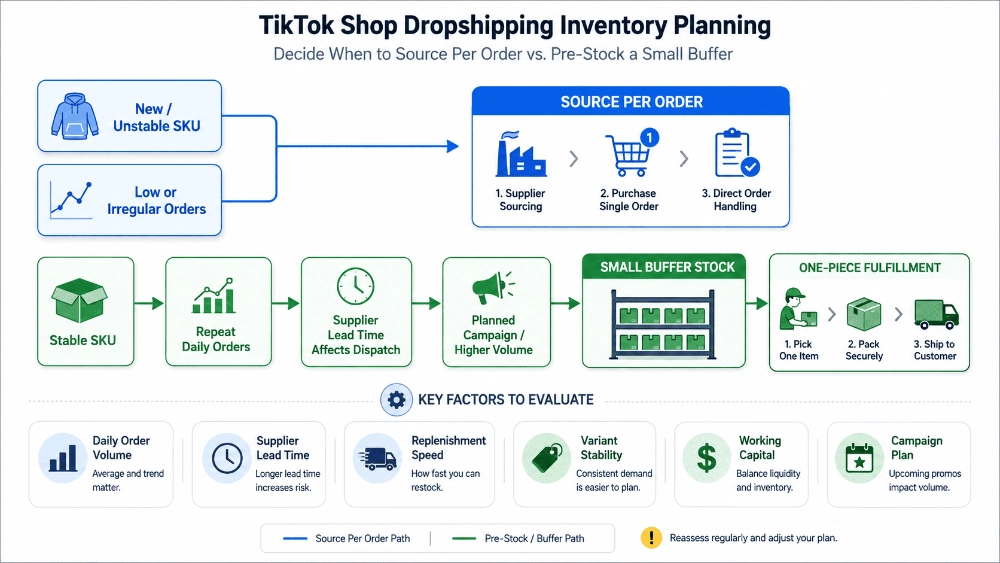
No existe una regla universal como mantener un inventario de siete días para cada producto. Un accesorio estable con un plazo de entrega corto por parte del proveedor presenta un perfil de riesgo diferente al de un producto electrónico frágil con varias variantes. Un inventario de reserva adecuado debe considerar la demanda, el reabastecimiento, la calidad y el flujo de caja.
Utilice conjuntamente las variables de demanda y reposición.
| Factor | Pregunta de inventario |
| Pedidos diarios promedio | ¿Cuál es el nivel de ventas normal? |
| Pedidos diarios en hora punta | ¿Qué tan grandes son los picos de demanda a corto plazo? |
| Plazo de entrega del proveedor | ¿Cuánto tiempo tardará en llegar el stock de reposición al almacén? |
| fallos de control de calidad | ¿Cuántas unidades podrían quedar no disponibles tras la inspección? |
| Fiabilidad del reabastecimiento | ¿El proveedor cumple con el plazo de reposición previsto? |
| Mezcla de variantes | ¿Qué tallas, colores o modelos se venden realmente? |
| Exposición al efectivo | ¿Cuánto capital circulante puede permanecer en existencias de forma segura? |
| Estabilidad de la tendencia | ¿La demanda es recurrente o está impulsada por un evento breve? |
El objetivo es cubrir una exposición realista al reabastecimiento, manteniendo al mismo tiempo un número reducido de variantes de movimiento lento.
Los puntos de reorden deberían cambiar a medida que la SKU madura.
Un producto en su segunda semana de pruebas no debería usar el mismo umbral de reorden que un SKU con meses de demanda recurrente. Las reglas de inventario deben evolucionar a medida que se disponga de más historial de pedidos.
El vendedor puede mantener una cantidad limitada en almacén mientras cada pedido del cliente se selecciona, verifica, empaqueta, etiqueta y envía individualmente. El inventario anticipado modifica el calendario de compras, no el modelo de entrega de un pedido a la vez.
Cómo funciona el stock de reserva con el cumplimiento de pedidos de una sola pieza
Para muchos vendedores en crecimiento, la solución intermedia ideal no es ni la falta total de existencias ni un almacenamiento masivo. Se trata de un pequeño stock de reserva ubicado cerca del punto de venta y que se repone a medida que se venden las unidades. Esto elimina la dependencia de las compras a proveedores del proceso crítico para mantener un inventario estable, sin comprometer la gestión individual de los pedidos.
El stock disponible acorta el proceso de pedido.
Para los productos que ya tiene en stock, LZ puede gestionar los pedidos directamente en el almacén sin necesidad de esperar a que el proveedor realice una nueva compra. Su modelo operativo también incluye visibilidad de pedidos y saldos mediante un sistema ERP, múltiples canales logísticos, control de calidad y comunicación personalizada con el cliente.
LZ Dropshipping Combina el abastecimiento de productos, el almacenamiento, los controles de calidad, el cumplimiento automatizado, el seguimiento de pedidos y el soporte logístico. servicio de pedidos con un solo clic Conecta la compra de productos con la recepción en almacén, la inspección y la preparación del envío. El sitio web actual de LZ también incluye, entre sus servicios, la gestión automatizada de pedidos, el seguimiento de pedidos, el control de calidad, la logística y la atención al cliente.
Esta estructura permite que el stock disponible respalde el envío de una sola unidad, mientras que los productos nuevos o de menor duración se gestionan bajo pedido.
La reposición debe ajustarse a las ventas reales.
El inventario de reserva debe reponerse a medida que se venden las unidades, no porque haya espacio disponible en el almacén. Las revisiones permiten comparar las ventas, el inventario utilizable, las entradas de stock y los plazos de entrega de los proveedores.
La gestión de inventario en el dropshipping se vuelve más estable cuando el reabastecimiento está vinculado al movimiento de SKU. Los productos de alta rotación reciben decisiones de compra con mayor antelación; las variantes de baja rotación mantienen un nivel de inventario reducido. Si la demanda comienza a disminuir, la cantidad de reorden debería reducirse antes de que se acumule un exceso de existencias.
Un servicio de cumplimiento de pedidos de automóviles LZ puede conectar los pedidos de tienda con los flujos de trabajo de gestión y seguimiento en el almacén, mientras que las decisiones sobre el inventario aún requieren criterio comercial por parte del vendedor y el equipo de abastecimiento. Actualmente, LZ ofrece la gestión automatizada de pedidos y el seguimiento en tiempo real como parte de su estructura de servicios de gestión de pedidos.
¿Qué ocurre cuando un producto deja de venderse?
La planificación de inventario también necesita una regla de salida. Los vendedores suelen centrarse en la falta de existencias y pasan por alto la necesidad de reponerlas cuando la demanda disminuye. Un proceso de dropshipping eficaz en TikTok debería identificar la caída de las ventas con suficiente antelación para reducir las compras antes de que el stock se vuelva difícil de liquidar.
Deje de reabastecerse antes de que el stock se convierta en una carga.
Cuando disminuyen las ventas recurrentes, la primera medida suele ser reducir o suspender el reabastecimiento. Las unidades existentes pueden seguir distribuyéndose individualmente mientras el equipo analiza si la demanda es estacional, está relacionada con la creatividad, es específica del mercado o es permanentemente más débil.
El inventario restante también puede distribuirse a través de otros canales activos donde el producto ya tiene relevancia. El objetivo es una venta controlada, en lugar de una compra mayor.
Esta etapa forma parte de las estrategias de escalabilidad responsables del dropshipping, ya que la escalabilidad implica saber cuándo reducir la exposición y cuándo aumentarla.
Conclusión
La planificación de inventario para el dropshipping en TikTok debe adaptarse al ciclo de vida del producto. Los SKU nuevos e irregulares pueden seguir gestionándose bajo pedido mientras el vendedor valida la demanda, la fiabilidad del proveedor, la calidad del producto y las condiciones de envío. Los productos estables pueden justificar un pequeño stock de reserva una vez que se definan los pedidos recurrentes y los plazos de reposición.
El sistema de pre-abastecimiento aún permite el envío de piezas individuales, ofreciendo a cada cliente un pedido seleccionado, verificado, empaquetado y enviado de forma personalizada, al tiempo que se acorta el tiempo entre la compra y el envío.
Para los vendedores que pasan de las pruebas de productos al volumen de compra repetida, Enviar el enlace del producto, el mercado objetivo, el patrón de pedidos recientes y el volumen de campaña previsto a LZ. para una revisión del flujo de trabajo de abastecimiento e inventario.