
Health care products sit in a category where customer expectations are structurally higher than in most consumer goods. A delayed shipment, damaged packaging, or inconsistent product condition not only creates a refund but also erodes trust and triggers compliance risk across marketplaces. For sellers operating at scale, fulfillment is no longer a back-end function. It becomes part of the product experience itself.
This article examines healthcare product fulfillment from an operational perspective. The goal is to help you evaluate systems, workflows, and infrastructure rather than tools or tactics, so that your fulfillment model supports long-term stability instead of short-term volume.
Why Does Fulfillment Risk Matter More for Health Care Products?
The sensitivity of this category reshapes the entire risk profile. Unlike fashion or gadgets, mistakes in health-related fulfillment carry disproportionate consequences.
Safety expectations
Buyers assume hygienic handling, intact packaging, and consistent product condition. Even minor defects, such as crushed boxes or broken seals, can be interpreted as safety issues rather than logistics errors.
Platform compliance pressure
Marketplaces increasingly track dispatch speed, tracking accuracy, and complaint ratios. A pattern of fulfillment inconsistency can quickly lead to account warnings, listing suppression, or traffic reduction.
Reputation compounding effect
Negative reviews in health-related niches influence purchasing behavior more strongly than in other categories, leading to faster trust loss and slower recovery speed.
What Should You Evaluate in Product Selection Before Fulfillment Even Starts?
Fulfillment quality begins long before the parcel enters the warehouse. The weakest point is often the upstream decision-making layer.
Supplier screening
A stable supply partner matters more than price. You need predictable quality, repeatable production, and reliable documentation rather than occasional low-cost opportunities. Dropshipping workflows emphasize this by requiring suppliers to meet defined quality and delivery criteria before products enter circulation.
Demand validation
Health care categories punish aggressive testing strategies. Products built on exaggerated claims or unclear positioning invite disputes and chargebacks, so the selection should focus on practical, daily-use items with clear value rather than hype-driven trends.
Category compliance
Certain items require special labeling, handling, or regional compliance. You reduce long-term risk by filtering such products before listing, rather than trying to resolve problems after orders have shipped.
A structured sourcing service, such as product sourcing, supports this stage by screening suppliers, evaluating product consistency, and aligning product selection with platform expectations rather than raw margin potential.

How Important Is Quality Control Inside the Fulfillment Process?
Even strong products fail if the handling process lacks discipline. In health-related fulfillment, operational detail defines perceived professionalism.
Inbound inspection
Professional fulfillment systems include inspection when goods enter storage. This step mainly checks visible defects, packaging integrity, and batch consistency before items are approved for distribution. Many dropshipping service frameworks explicitly include quality inspection as a standard process.
Order-level verification
Each outbound parcel should match the SKU, quantity, and condition required by the order. Errors in health care categories often escalate directly into complaints rather than simple returns.
Photography and documentation
Some fulfillment systems provide photo records of inbound goods or packed orders, which can enable sellers to monitor product condition remotely and provide evidence in the event of customer disputes.
Why Does Automation Become a Core Capability at Scale?
Manual workflows appear manageable at low volume. However, once order numbers increase, manual handling becomes the largest source of hidden risk.
Order synchronization
Automated synchronization between store systems and fulfillment systems reduces transcription errors, which is especially important in sales scenarios involving multiple SKUs and multiple platforms.
Real-time tracking
Tracking visibility is no longer a convenience. Platforms increasingly expect sellers to provide accurate logistics information, and customers expect to see parcel movement immediately after purchase.
Speed discipline
Many platforms enforce strict dispatch time windows. Systems that can automatically push orders into fulfillment pipelines not only reduce variance but also improve consistency.
This is where structured systems, such as auto fulfillment, provide measurable operational benefit. By reducing manual order handling and enforcing standardized workflows, they lower the probability of error while improving dispatch stability.

How Does Warehousing Location Affect Customer Experience?
Geography is not neutral in health care fulfillment, but is directly perceived by customers.
Delivery expectations
Customers buying health-related products tend to expect faster and more predictable delivery, so long, uncertain transit undermines perceived reliability.
Cross-border friction
International shipping introduces customs delays, tracking gaps, and occasional inspections. These situations tend to increase complaints in terms of sensitive product categories.
Distributed inventory strategy
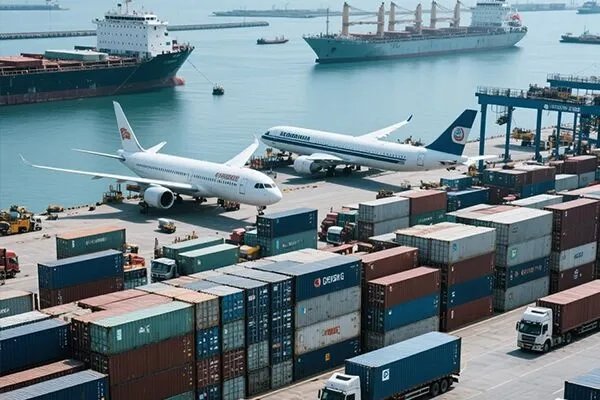
Storing inventory closer to the end customer reduces transit time, lowers damage risk, and improves platform performance indicators such as on-time delivery rates.
Distributed storage models, such as global warehousing, support this approach by allowing inventory to be positioned across regions instead of concentrated in a single origin warehouse.
Where Does LZ Dropshipping Fit into This Fulfillment Structure?
In many cases, sellers treat fulfillment providers as logistics vendors. A more accurate framing is an infrastructure partnership. LZ Dropshipping functions as not only a transactional intermediary but also as an operational layer that connects sourcing, inspection, warehousing, automation, and delivery into a structured system.
Our model reflects common components found in professional dropshipping frameworks—supplier coordination, inbound quality control, standardized warehouse operations, automated order processing, and multi-channel logistics orchestration. These elements are essential for reducing operational variance and supporting scalable order execution.
What distinguishes this structure is not any single feature but the integration. Instead of isolated tools for sourcing, packing, or shipping, the architecture links each step into a coherent process. For sellers managing health care products, this kind of integration matters because it can reduce the likelihood that errors appear between systems, between teams, or between stages of the workflow.
Rather than replacing your operational control, such a system supports it by enforcing consistency. That consistency is often what separates short-term sellers from operators who remain viable across multiple platform cycles.
How Should You Balance Cost Control with Fulfillment Stability?
Cost discipline is necessary, but in health-related fulfillment, excessive cost reduction often produces invisible losses.
Cheap logistics vs. customer trust
Low-cost shipping channels frequently bring higher loss rates, longer delays, and weaker tracking. The cost of replacing orders, handling disputes, and protecting account health often exceeds the initial savings.
Manual labor vs. system cost
Human processing may appear cheaper than automated systems, but error rates scale with volume. One mispacked order in health care products can cost more than dozens of correct ones.
Short-term margin vs. long-term account health
Platform stability protects revenue streams. A consistent fulfillment record supports higher traffic exposure, better seller ratings, and fewer restrictions over time.
What Does a Professional Fulfillment Strategy Look Like in Practice?
When fulfillment is treated as infrastructure rather than a task, the entire model becomes more resilient.
Clear product policy
Professionally managed sellers define which products they will and will not carry, which contributes to avoiding ambiguous claims, grey-area compliance, and categories that result in disproportionate disputes.
Documented workflows
Repeatable processes matter more than individual skill. Inspection routines, packing standards, labeling procedures, and exception handling protocols all contribute to predictable performance.
Data feedback loops
Fulfillment systems generate data, including delays, returns, complaints, damages, and processing times. Sellers who review this data regularly adjust product selection, logistics routes, and packaging methods instead of reacting to crises.
Dropshipping frameworks emphasize visual monitoring of cross-border processes and data-based optimization as core mechanisms for improving distribution efficiency.
Conclusion
Health care products fulfillment is not about shipping parcels faster. It is about managing trust, controlling operational variance, and protecting long-term platform viability. Every weak link, including supplier inconsistency, missing inspection, manual processing error, and unstable logistics, creates a risk that compounds rather than disappears.
Sellers who approach fulfillment as infrastructure design rather than cost outsourcing tend to build more durable operations. They select products more carefully, structure workflows more clearly, and invest in systems that reduce randomness. In a category where reliability defines brand perception, fulfillment becomes part of the product itself rather than a background service.
FAQs
Q: Why is fulfillment more sensitive for health care products than for general consumer goods?
A: Buyers associate these products with personal safety. Delays, damaged packaging, or inconsistent condition immediately weaken trust and increase complaint risk compared with other categories.
Q: Can automation really reduce fulfillment risk, or does it only improve speed?
A: Automation reduces manual error, improves order accuracy, stabilizes dispatch time, and creates traceable records. These factors directly reduce operational risk rather than merely increasing speed.
Q: Is overseas warehousing always necessary for health care product sellers?
A: Not in every case. However, regional inventory placement often improves delivery reliability, lowers dispute rates, and aligns more closely with platform performance requirements in competitive markets.