
Dropshipping has come a long way from its position as a cheap way to enter global e-commerce. Today, it has become a platform-driven way of doing business as defined by platform regulations, logistics realities, and supply chain coordination. You are no longer competing for traffic or competing for ideas. You are competing for execution quality, resilience, and how efficiently your backend supports front-end growth.
The difference between stores that scale and those that quietly disappear often lies in operational design rather than marketing creativity.
Why Has Dropshipping Transformed from a Traffic Game to a System-Level Competency Competition?
In the earlier days of this industry, the pace of opening stores and getting clicks was crucial for growth, but those days are mostly behind us. Today, the kind of operating conditions work best for sellers who have treated dropshipping as a comprehensive operating system.
Now, delivery reliability, dispute ratio, refund cycles, and customer satisfaction have become important ranking inputs for the platform ecosystems. Logistics delays, inconsistent sourcing, or poor quality control do not remain isolated problems anymore, but directly lead to visibility loss and rising acquisition costs.
What Changed in the Competitive Landscape?
Automation, platform data transparency, and more stringent consumer protection regulations impacted the measurement of performance. Full-process order tracking and the real-time monitoring of delivery time can be realized. Late delivery or instability in the supply chain will directly lower the reputation of the account.
Consequently, success is less dependent upon creative campaigns but rather on predictable operational output.
How Does Product Sourcing Define Long-Term Profitability?
Margins are not made at the checkout but created further up the supply chain. Product Sourcing influences not only price but also delivery reliability, stable quality, and customer retention.
Modern dropshipping operations are characterized by well-structured supplier integration, inspection before shipment, SKU traceability, and a quick product cycle.
Why Does Supply Stability Matter More Than Price?
A low unit price loses its appeal when it introduces stock volatility or inconsistent batch quality. Delayed restocking or defective shipments generate refunds that reduce profits faster than any discount can recover.
Platforms increasingly reward stability over short-term price advantages. It is the main reason for the adoption of structured product sourcing services that reduces reliance on such factory networks and moves from ad hoc sourcing to verified supply chains, batch inspection requirements, and managed SKU introductions.

How Does Quality Control Influence Store Longevity?
Today, quality checks before warehousing and further downstream before shipping out have become commonplace in full-fledged fulfillment systems. Photography verification, packaging audit, and barcode-level tracking have reduced disputes and preserved store data for the long time.
Practically, a decreased number of disputes will result in a lower risk score on the platform and a predictable revenue cycle.
Why Does Fulfillment Speed Directly Shape Your Store’s Algorithm Performance?
Delivery speed is no longer just a customer experience variable, but an algorithmic signal. Order processing timelines influence store ranking, traffic distribution, and even eligibility for platform promotions.
Why Are 48-Hour Dispatch Cycles Becoming a Baseline?
Two-day dispatch is already the benchmark for major platforms today. If these stores reach the benchmark, their visibility will be greater; otherwise, their visibility will be reduced.
Backend systems that provide automatic order synchronization, freight calculation, tracking numbers, and real-time synchronization with platforms are now seen as one of norms rather than alternatives.
How Does Process Automation Reduce Operational Risk?
Manual order handling introduces delays, transcription errors, and inconsistent fulfillment timing. In contrast, automated workflows compress decision cycles and reduce human variance.
You gain not only speed but predictability, an increasingly valuable currency in platform-governed commerce.
How Does Infrastructure Decide Whether You Can Scale Beyond Early Revenue?
Early revenue can be achieved with minimal structure, but sustainable scale cannot be maintained. Once daily order volume rises, warehousing coordination, logistics routing, quality assurance, and exception handling must work as a unified system.
Why Does Global Warehousing Reshape Cost Structure?
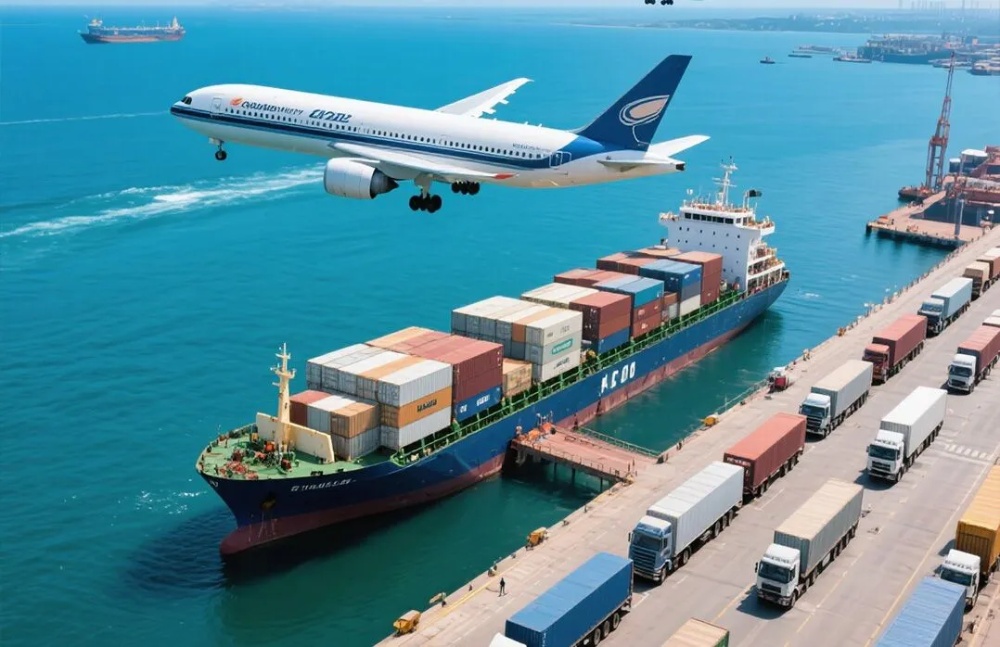
Distributed fulfillment shortens delivery routes, reduces customs bottlenecks, and lowers per-order logistics variance.
Access to coordinated global warehousing networks allows you to position inventory near consumption markets without capital-heavy private warehouse investments, thus improving both speed and cash-flow flexibility.
Where Does LZ Dropshipping Fit Into This Structural Model?
At this point, the success variables are clear: sourcing depth, fulfillment precision, system stability, and warehousing reach. The question becomes whether a service partner aligns with these structural needs.
LZ Dropshipping positions itself as an operational infrastructure layer rather than a simple intermediary. Our role is mainly focused on the coordination of supplier networks, product structuring, inspection routines, and order processing pipelines in a unified framework.
Instead of functioning as a marketplace, we operate more like a fulfillment operating system that supports sellers navigating platform-driven performance metrics. Our service design reflects attention to dispatch timing, dispute reduction, SKU lifecycle management, and scalable order processing.
Such a model is appropriate for the operators who use the dropshipping business model as a long-term commercial model rather than a short-term arbitrage opportunity. The focus of this model is placed upon standardized procurement flow processes, auto fulfillment, and cross-border logistical coordination.
What Operational Capabilities Separate Sustainable Stores From Disposable Stores?
Revenue alone does not define sustainability, but operational memory does.
Why Does Data Feedback Matter More Than Ad Spend?
Refund reasons, delivery exceptions, SKU churn, and customer complaints form an intelligence layer. Stores that convert this feedback into sourcing changes and fulfillment adjustments stabilize faster than those that simply increase advertising budgets.
Why Do Mature Sellers Prioritize Systems Over Tools?
Tools solve tasks, and systems preserve continuity. When every component from sourcing to dispatch confirmation feeds into a shared data structure, optimization becomes cumulative.
What Should Your Dropshipping Model Look Like in 2026 and the Future?
Future success favors architectural thinking.
Why Will Process Integration Replace Platform Dependence?
Platforms change rules, which can be absorbed by systems. Operators who integrate sourcing, inspection, warehousing, logistics, and data feedback into unified workflows adapt faster than those who rely on platform features alone.
FAQs
Q: Does dropshipping remain a viable option for seasoned sellers but not beginners?
A: Yes. It has developed into an infrastructure-based way of operating. Companies that have a structured approach to sales, inspection, and fulfillment can have a better return on capital than companies that manage inventory.
Q: Which operational factor most strongly affects long-term store stability?
A: Fulfillment reliability. Dispatch timing, tracking accuracy, and quality control directly influence platform trust scores and refund ratios.
Q: Can dropshipping scale into a serious commercial operation?
A: It can when treated as a system. Scalability comes from integrated sourcing, automated order execution, and logistics coordination—not from traffic volume alone.