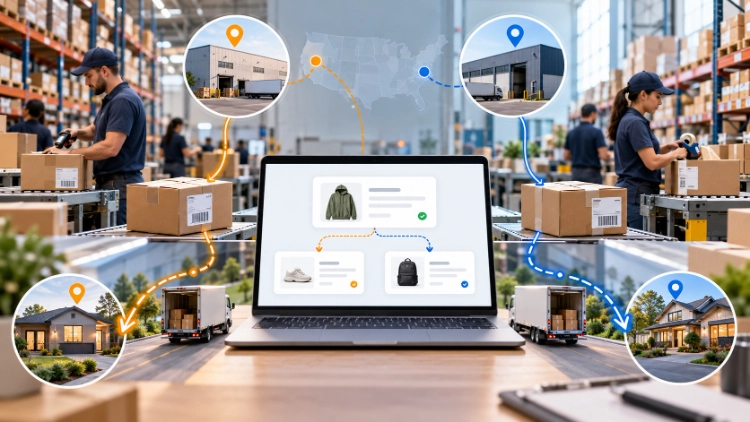
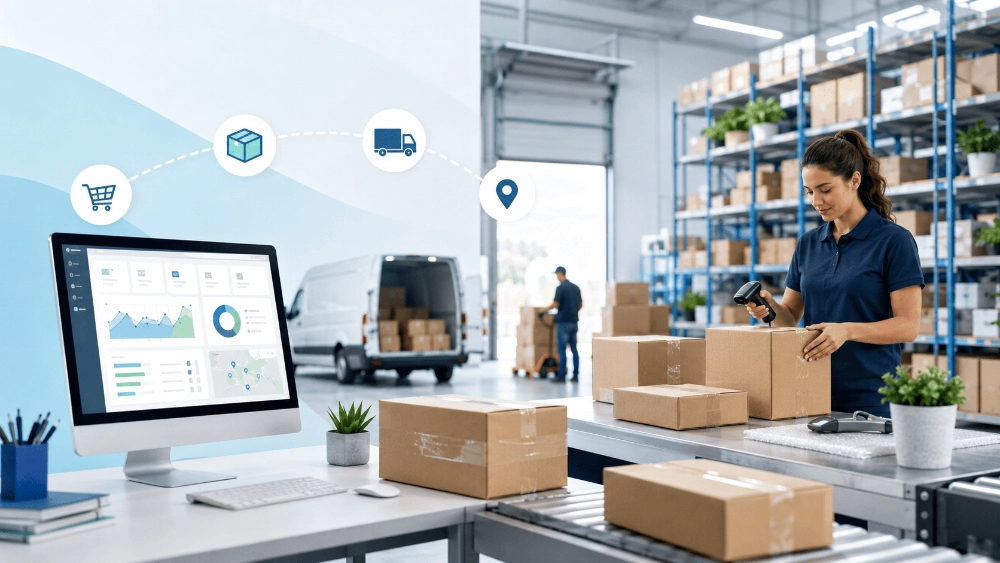
Een Shopify-winkel lijkt vanuit het perspectief van de klant misschien simpel: een productpagina, afrekenen, betalingsbevestiging en levering. Achter die stappen gaat echter een steeds complexer wordend orderverwerkingsproces schuil naarmate het ordervolume toeneemt. De voorraad moet aan de juiste locatie worden toegewezen, het juiste artikelnummer (SKU) moet worden geselecteerd, de verpakking moet aan de productvereisten voldoen, de trackinginformatie moet naar de juiste order leiden en operationele uitzonderingen moeten duidelijk worden afgehandeld.
Een Shopify-fulfillmentdienst wordt waardevol wanneer deze activiteiten niet langer afhankelijk kunnen zijn van handmatige berichten, spreadsheets of losgekoppelde magazijninstructies. Voor groeiende webwinkels is de belangrijkste vraag niet of een provider pakketten kan verzenden, maar of de provider Shopify-ordergegevens kan koppelen aan voorraadbeheer, magazijnuitvoering, kwaliteitscontrole, logistiek, tracking en uitzonderingsbeheer. Dit artikel legt uit wat een schaalbare fulfillmentpartner zou moeten beheren, van orderontvangst tot uiteindelijke levering.
Wat een Shopify-fulfillmentdienst daadwerkelijk zou moeten beheren
Een fulfilmentprovider fungeert als schakel tussen de Shopify-bestelling en de fysieke verzending. Shopify ondersteunt fulfilmentdiensten van derden die bestellingen namens verkopers voorbereiden en verzenden. De fulfilmentactiviteiten zijn gekoppeld aan locaties, voorraad, orderregels en tracking. Hierdoor is operationele nauwkeurigheid net zo belangrijk als de fysieke verzending van een pakket.
Ordergegevens moeten de juiste fulfilmentlocatie bereiken.
De orderverwerking bij Shopify begint met accurate ordergegevens. Voordat het magazijnwerk begint, heeft de orderverwerking het product, de variant, de hoeveelheid, de bestemming, de verzendmethode en de orderstatus nodig. Als een verkoper meerdere magazijnen of fulfilmentpartners gebruikt, moet elk artikel ook naar de juiste locatie worden doorgestuurd.
Dit is vooral belangrijk voor winkels die vergelijkbare varianten, bundels, regionale voorraad of producten van verschillende leveranciers verkopen. Een naadloze koppeling tussen Shopify en het orderverwerkingssysteem vermindert herhaalde handmatige invoer en biedt inkoop-, magazijn-, logistieke en klantenserviceteams een gedeelde orderreferentie.
Shopify's officiële documentatie voor de afhandeling van bestellingen Dit legt uit hoe externe fulfilmentdiensten de fulfilmentactiviteiten koppelen aan de locaties en voorraden van de verkopers.
De SKU-toewijzing moet overeenkomen met het fysieke product.
De producttitel die in de webwinkel wordt weergegeven, is geen voldoende identificatiecode voor het magazijn. Elke Shopify-variant moet overeenkomen met een exacte magazijn-SKU, inclusief relevante kenmerken zoals maat, kleur, model, stekkertype, verpakkingshoeveelheid of meegeleverde accessoires.
Onjuiste koppelingen kunnen ertoe leiden dat het verkeerde artikel wordt verzonden, zelfs als de bestelling van de klant correct is. Verkopers moeten SKU-relaties testen vóór productlanceringen, campagnes of een toename van het verkeer. Elke wijziging van leverancier, aanpassing van de bundel of update van de verpakking moet aanleiding geven tot een nieuwe controle van de koppelingen, zodat de digitale productgegevens blijven overeenkomen met de voorraad in het magazijn.
Inzicht in de voorraad bepaalt het fulfilmentproces.
De voorraad bepaalt of een bestelling direct kan worden verzameld en verpakt, of dat er eerst moet worden ingekocht en aangevuld. Voor groeiende B2B-bedrijven heeft dit onderscheid gevolgen voor het werkkapitaal, de voorbereiding op campagnes, de verzendplanning en de klantcommunicatie. Een betrouwbaar systeem moet daarom de beschikbare voorraad weergeven voordat een magazijn een bestelling definitief verwerkt.
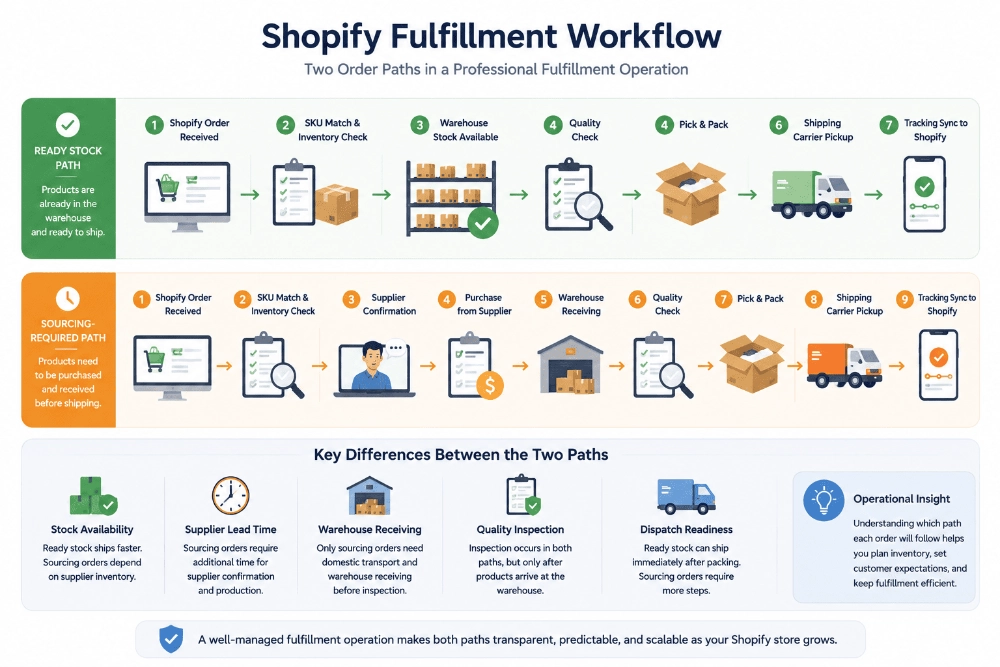
Bestellingen uit voorraad en bestellingen waarvoor inkoop nodig is, vereisen verschillende werkprocessen.
Een bestelling van voorraadartikelen kan, zodra de orderinformatie is bevestigd, overgaan tot het verzamelen, inspecteren, verpakken en verzenden. Voor een bestelling waarvoor inkoop nodig is, kan het nodig zijn om eerst de leverancier te bevestigen, in te kopen, binnenlands te transporteren, de goederen in het magazijn te ontvangen en een kwaliteitscontrole uit te voeren voordat het pakket naar de klant kan worden klaargemaakt.
Dit onderscheid is belangrijk voor Shopify-winkels die continu nieuwe producten testen en tegelijkertijd de verkoop van bewezen producten opschalen. Nieuwe producten kunnen ordergestuurd blijven om de voorraadrisico's te beperken, terwijl stabiele producten in kleine hoeveelheden dichter bij het magazijn kunnen worden opgeslagen.
Een fulfilmentprovider moet deze twee trajecten zichtbaar maken, zodat verkopers onderscheid kunnen maken tussen bestellingen die klaar zijn voor verwerking en bestellingen die nog afhankelijk zijn van de voorraad van de leverancier.
Voorraadadministratie moet overeenkomen met de werkelijke situatie in het magazijn.
Een systeemhoeveelheid is alleen waardevol als deze de bruikbare voorraad weerspiegelt. Gereserveerde eenheden, beschadigde producten, afgekeurde inspecties, onjuiste varianten en voorraad die nog niet is aangekomen, mogen niet als direct beschikbaar worden beschouwd.
Een Shopify-distributiemagazijn moet de status op SKU-niveau bijhouden gedurende het gehele proces, van ontvangst en inspectie tot opslag, toewijzing, orderverzameling en verzending. Verkopers met meerdere locaties moeten bovendien inzicht hebben in de fysieke locatie van elk product en welke locatie verantwoordelijk is voor de afhandeling van de bestelling.
Een nauwkeurige voorraadstatus voorkomt oververkoop en biedt inkoopteams een duidelijkere basis voor aanvullingsbeslissingen.
Shopify Third Party Fulfillment moet de magazijnuitvoering controleren.
Het uitbesteden van de orderafhandeling verplaatst het fysieke werk, maar ontslaat de verkoper niet van zijn verantwoordelijkheid voor de klantervaring. Het juiste product moet nog steeds in acceptabele staat bij de juiste klant terechtkomen. Een professionele dienstverlener heeft daarom duidelijke procedures nodig voor ontvangst, inspectie, opslag, orderverzameling, verpakking en verzendvoorbereiding, in plaats van de orderafhandeling alleen te beschouwen als het aanmaken van verzendlabels.
Ontvangst- en kwaliteitscontroles beschermen de goedgekeurde SKU.
Bij aankomst in het magazijn dient de ontvangstafdeling de productidentiteit, hoeveelheid, zichtbare staat en relevante verpakkingsgegevens te controleren. De grondigheid van de inspectie moet aansluiten bij de productcategorie en de risico's die gepaard gaan met klachten of retourzendingen van klanten.
Kledingstukken moeten mogelijk gecontroleerd worden op maat, kleur en zichtbare gebreken. Elektronische apparaten moeten mogelijk gecontroleerd worden op functionaliteit, stekkertype, spanning en meegeleverde accessoires. Gepersonaliseerde artikelen moeten mogelijk gecontroleerd worden op logo's, printposities, inzetstukken of andere goedgekeurde merkdetails.
LZ ondersteunt productkwaliteitscontrole als onderdeel van de workflow in het magazijn en de orderafhandeling. Gedefinieerde inspectiepunten helpen verkopers om defecten van leveranciers te identificeren voordat producten de klant bereiken en bieden duidelijker bewijsmateriaal bij kwaliteitsgeschillen.
Orderverzameling en verpakking vereisen herhaalbare standaarden.
Een Shopify-distributiecentrum moet de koppeling tussen de Shopify-order, de magazijn-SKU en het uiteindelijke verzendlabel gedurende het gehele pick- en verpakkingsproces behouden.
Dit is belangrijk wanneer visueel gelijkende producten in dezelfde opslagruimte worden bewaard of wanneer een bestelling van een klant meerdere artikelen bevat. De verpakking moet ook de producteigenschappen weerspiegelen. Kwetsbare producten vereisen mogelijk interne bescherming, vloeistoffen moeten lekvrij worden gemaakt en bij producten met meerdere componenten moeten onderdelen niet ontbreken.
Als verkopers gebruikmaken van dozen, inlays, etiketten of verpakkingen met hun eigen merklogo, moeten deze materialen gekoppeld zijn aan de juiste SKU of orderinstructie, in plaats van informeel door magazijnmedewerkers te worden aangebracht.
Verzending en tracking maken het fulfilmentproces compleet.
Een pakket is pas operationeel compleet wanneer er een verzendlabel is aangemaakt. De vervoerder moet het pakket accepteren, het trackingnummer moet overeenkomen met de juiste bestelling en de verzendstatus moet worden teruggestuurd naar Shopify. Deze koppeling is van invloed op zowel het interne orderbeheer als de informatie die klanten na hun aankoop ontvangen.
De keuze van de vervoerder moet aansluiten op de eisen van het product en de bestemming.
De goedkoopste route is niet per se de meest geschikte route voor elke bestelling. Bij de keuze voor een verzendmethode moet rekening worden gehouden met de bestemming, de afmetingen van het pakket, het gewicht, eventuele productbeperkingen, de kwaliteit van de tracking, het verwachte serviceniveau en de kosten voor het afhandelen van leveringsproblemen.
Shopify-winkels die internationaal actief zijn, hebben vaak meer dan één logistieke optie nodig. Een lichtgewicht accessoire, een kwetsbaar product voor in huis, een vloeibaar artikel en een apparaat op batterijen vereisen mogelijk verschillende transportroutes.
Een capabele fulfilmentpartner moet, voordat het ordervolume toeneemt, vaststellen welke logistieke kanalen geschikt zijn voor het product en de bestemming, in plaats van elk artikelnummer via één standaard verzendroute te forceren.
Voor orderverwerking en -tracking bij Shopify is slechts één record nodig.
De trackinginformatie moet verwijzen naar dezelfde bestelling die in de verwerking is opgenomen. Shopify kan trackinginformatie weergeven via de orderstatuspagina en klantmeldingen wanneer de verzendgegevens correct zijn bijgewerkt.
De operationele vereiste is eenvoudig: het ordernummer, het pakket, de vervoerder, de service en het trackingnummer moeten met elkaar verbonden blijven.
Een geldig trackingnummer dat aan de verkeerde klant is gekoppeld, kan leiden tot leveringsgeschillen, supportaanvragen en onnodige terugbetalingen. Het afstemmen van de verzending vanuit het magazijn met de Shopify-bestelling moet daarom onderdeel zijn van het verzendproces.
Winkels die behoefte hebben aan meer automatisering kunnen ook de handleiding van LZ raadplegen. Automatische orderafhandeling voor Shopify, dat zich specifiek richt op ordersynchronisatie en het bijhouden van updates.
Groeiende winkels hebben behoefte aan uitzonderingsbeheer, niet alleen aan automatisering.
Automatisering is effectief voor herhaalbare activiteiten, maar een hoger volume brengt ook sneller uitzonderingen aan het licht. Voorraadtekorten, afgekeurde inspecties, onjuiste adressen, afwijzingen door de transporteur, vertraagde scans, annuleringen en leveringsvertragingen vereisen allemaal beslissingen. Een Shopify-fulfillmentdienst voor groeiende winkels zou deze bestellingen zichtbaar moeten maken in plaats van ze in een algemene verwerkingswachtrij te laten staan.
Elke uitzondering heeft een eigenaar en een status nodig.
Elk operationeel probleem moet worden toegewezen aan het team dat in staat is het op te lossen.
Tekorten bij leveranciers kunnen actie vereisen om nieuwe leveranciers te vinden. Afgekeurde inspecties kunnen vervanging van het magazijn noodzakelijk maken. Afwijzing door een transporteur kan een nieuwe logistieke route vereisen. Problemen met adressen of annuleringsverzoeken kunnen beoordeling door de klantenservice vereisen.
Een efficiënte workflow zorgt ervoor dat het ordernummer, het probleem, het bewijsmateriaal, de huidige status, het verantwoordelijke team en de volgende actie met elkaar verbonden blijven. Dit vermindert dubbele communicatie en voorkomt dat verschillende afdelingen met verschillende versies van hetzelfde probleem werken.
Herhaalde uitzonderingen zouden het proces moeten veranderen.
Een uitzondering mag niet uit de operationele beoordeling verdwijnen simpelweg omdat één bestelling is afgehandeld.
Herhaaldelijk onjuiste varianten kunnen wijzen op een zwakke SKU-mapping. Terugkerende productschade kan een stevigere verpakking vereisen. Vertraagde scans door de transporteur kunnen een probleem bij de overdracht vanuit het magazijn aan het licht brengen. Frequente voorraadtekorten kunnen erop duiden dat de aanvullingsregels niet overeenkomen met het huidige verkooppatroon.
Voor groeiende webwinkels is deze feedbackloop een van de belangrijkste redenen om Shopify's fulfilment door derden te evalueren als een volwaardig operationeel proces, in plaats van alleen als uitbestede magazijnarbeid.
Hoe kies je een fulfilmentdienst voor Shopify?
Bij de selectie van een leverancier moet eerst gekeken worden naar de operationele controle, voordat er een prijsvergelijking plaatsvindt. Lage fulfilmentkosten hebben beperkte commerciële waarde als de leverancier de nauwkeurigheid van SKU's, voorraadinzicht, kwaliteitscontroles, traceerbaarheid en de afhandeling van uitzonderingen niet kan garanderen. Webwinkeliers moeten beoordelen wat de leverancier momenteel consistent kan uitvoeren en of die controles ook werken wanneer het ordervolume toeneemt.
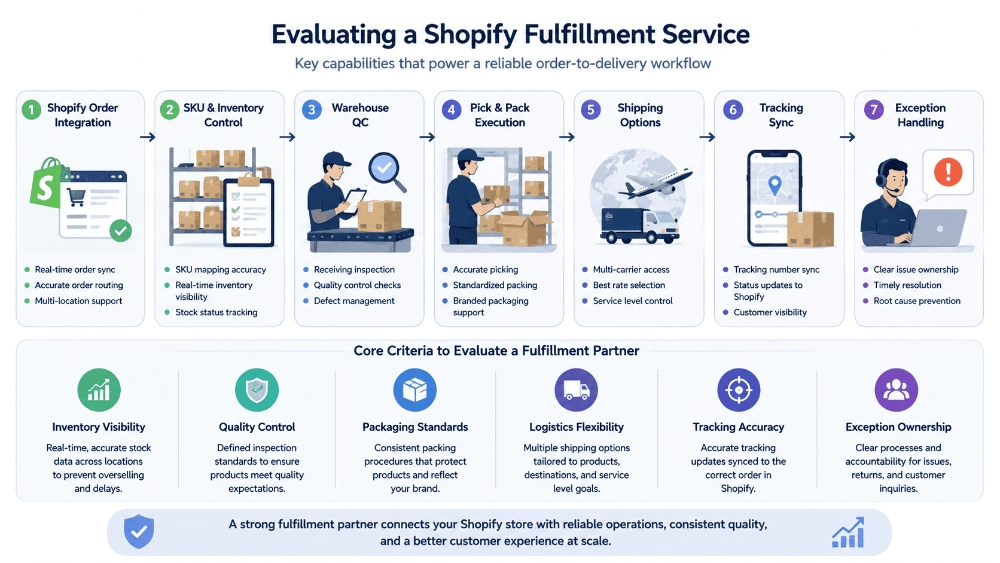
Gebruik een B2B-fulfillmentchecklist
| Controlegebied | Vragen ter verificatie |
| Winkelintegratie | Kunnen ordergegevens en statusupdates automatisch worden overgezet zonder herhaalde handmatige invoer? |
| SKU-toewijzing | Zijn Shopify-varianten gekoppeld aan exacte magazijn-SKU's? |
| Inventaris | Kunnen bruikbare, gereserveerde, afgekeurde en binnenkomende voorraden van elkaar worden onderscheiden? |
| Ontvangst | Worden de hoeveelheden en productidentiteiten gecontroleerd bij aankomst van de voorraad? |
| Kwaliteitscontrole | Zijn de inspectiepunten gedefinieerd per productcategorie? |
| Verpakking | Kunnen de instructies voor bescherming en branding worden gestandaardiseerd? |
| Verzending | Zijn er meerdere routes beschikbaar op basis van product en bestemming? |
| Volgen | Wordt de trackinginformatie correct teruggestuurd naar de juiste Shopify-bestelling? |
| Uitzonderingen | Is de verantwoordelijkheid voor voorraadbeheer, kwaliteitscontrole, adresgegevens en transportproblemen duidelijk? |
Deze checklist is ook van toepassing op de afhandeling van Shopify-bestellingen door derden, omdat een betrouwbare afhandeling afhankelijk is van zowel de informatiestroom als de fysieke uitvoering in het magazijn.
Waar past LZ Dropshipping in een Shopify-fulfillmentworkflow?
LZ Dropshipping Het bedrijf ondersteunt productinkoop, magazijnbeheer, kwaliteitscontroles, orderverwerking, logistieke selectie, tracking en ERP-gebaseerd orderbeheer. De dienstverlening omvat tevens diverse logistieke opties en persoonlijke klantcommunicatie.
Voor Shopify-verkopers biedt LZ's automatische orderverwerkingsservice Dit is relevant wanneer winkelbestellingen moeten worden verwerkt en gevolgd in het magazijn, met minder herhaalde handmatige overdracht.
De configuratie moet nog steeds beginnen met een nauwkeurige SKU-mapping, productspecificaties, inspectievereisten, verpakkingsinstructies, voorraadstatus en bestemmingsvereisten. Automatisering verbetert de uitvoering alleen als de onderliggende product- en ordergegevens accuraat blijven.
Hierdoor blijft de fulfilmentpartner afgestemd op de operationele standaarden die in het artikel worden beschreven, in plaats van technologie, magazijnwerk en logistiek als losse processen te behandelen.
Conclusie
Een Shopify-fulfillmentdienst moet meer doen dan alleen labels printen en pakketten aan een transporteur overdragen. Groeiende webshops hebben een geïntegreerd proces nodig dat ordergegevens, SKU-mapping, voorraadbeheer, ontvangst, kwaliteitscontrole, orderverzameling, verpakking, verzending, tracking en uitzonderingsbeheer omvat.
Een robuuste Shopify-oplossing voor orderafhandeling door derden zorgt ervoor dat digitale ordergegevens en de fysieke magazijnafhandeling op elkaar zijn afgestemd, ook bij schommelingen in het ordervolume. Verkopers die providers evalueren, zouden die verbinding moeten testen voordat ze meer voorraad, producten of campagnes in de orderafhandelingsworkflow integreren.
Voor winkels die zich voorbereiden op het uitbesteden of herstructureren van de orderafhandeling, Stuur LZ uw Shopify-productmix, doelmarkten, huidige ordervolume en operationele vereisten. om een praktische workflow voor inkoop en orderafhandeling te bekijken.