No longer just a back-office activity, retail order fulfillment has become the operating system for high-performing international sellers. It determines delivery speed, customer experience, cash flow, and long-term scalability. Starting at the moment the buyer clicks “pay” all the way to delivery to the doorstep, every stage in the process has clear, though often hidden, technical, operational, and financial implications.
This guide describes the complete “fulfillment” process from a practical logic standpoint, including the real structural elements of a workflow and a systems-based philosophy. It mainly focuses on how the process is executed when performance is a required and expected outcome.
What Really Happens After a Customer Places an Order?
Once the payment is processed, the order becomes a live operation instead of a marketing conversion to begin with. At this stage, various issues may arise, such as delays, data errors, or manual friction.
How does order data move across systems?
A standard workflow begins with order capture from the storefront, followed by synchronization into a fulfillment environment, which includes SKU mapping, shipping address validation, stock status check, and cost confirmation. The objective at this point is just to avoid a mismatch between what the customer bought and what the supply chain can actually ship.
In the dropshipping model, the seller forwards order data to the supplier, who then ships directly to the customer. The seller earns the margin between retail price and procurement cost, while the supplier executes the physical operation. This structure removes inventory burden but raises the importance of data accuracy and process automation.
Why Is Supplier Coordination the Core of Fulfillment Stability?
Order fulfillment does not fail because of packaging, but because of coordination gaps between seller systems and supplier systems.
What defines a reliable fulfillment partner?
Several structural capabilities determine whether the fulfillment chain stays stable under volume:
- Ability to maintain consistent product quality through inbound inspection
- Capability to handle packing, labeling, and order-specific customization
- Flexible logistics channel selection based on destination and cost targets
- Warehouse process discipline that supports traceability and auditability
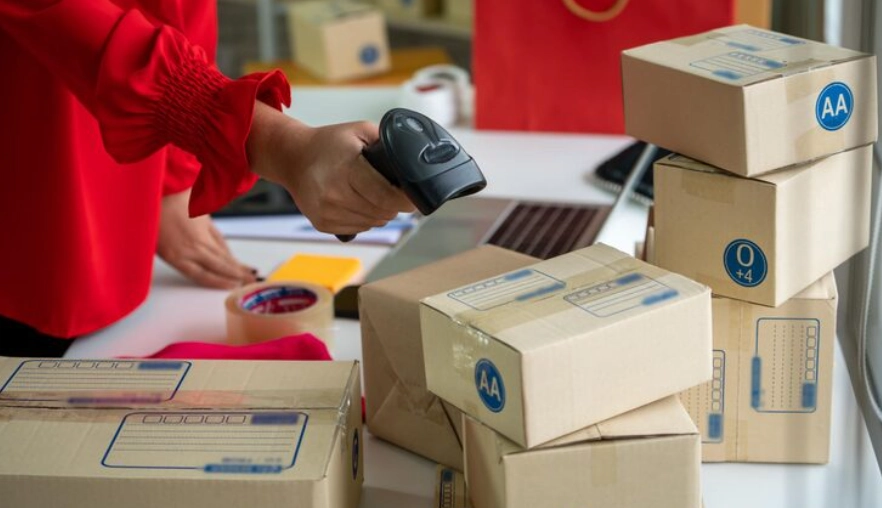
Generally speaking, the operational scope of professional dropshipping service providers includes warehousing, quality inspection, order-based picking and packaging, as well as different types of logistical routing. All these are intended to reduce various risks faced by the seller. If lacking these capacities, the sellers may face several hidden costs, including delays, inconsistencies with tracking information, rising disputes, and a lack of control over customer satisfaction.
Where Does Automation Actually Improve Fulfillment Performance?
Automation is not a buzzword in fulfillment, but the difference between scalable operations and fragile manual workflows.
Which steps benefit most from automation?
The most valuable automation areas sit in repetitive, high-frequency actions:
- Order synchronization from store to fulfillment system
- Automatic calculation of procurement cost and shipping cost
- Trigger-based order routing without manual intervention
- Automatic generation of tracking numbers and logistics feedback
In practice, services such as one-click ordering and auto-fulfillment compress decision latency. Instead of operators handling each order individually, systems trigger execution based on predefined rules. This reduces human error and shortens processing time windows.
A mature fulfillment workflow often integrates services such as one-click ordering
to eliminate manual SKU matching and repetitive purchasing tasks across large order volumes.

How Does LZ Dropshipping Fit into a Professional Fulfillment Architecture?
At this point in the workflow, it becomes clear that fulfillment quality depends less on individual effort and more on infrastructure maturity.
Within modern cross-border ecosystems, LZ Dropshipping functions as an integrated service layer rather than a simple intermediary. Our positioning focuses on linking product sourcing, system-based order processing, warehousing execution, and global delivery into one coherent chain.
Our service logic corresponded to what high-performing sellers actually need at scale. What you need includes:
- Structured procurement coordination rather than ad-hoc buying
- Systematic quality checks rather than random inspection
- Predictable logistics execution rather than best-effort shipping
The service focuses on centralized control of fulfillment flows instead of making sellers handle quite a lot of fragmented processes themselves, and allows the front-end business to focus on traffic, conversion, and customer lifecycle.
How Do Warehousing Decisions Affect Delivery Speed and Cost?
Even in a dropshipping structure, warehousing is a strategic variable.
When does warehouse placement become a performance lever?
Warehousing becomes critical when you reach any of the following thresholds:
- Order volume requires batching and consolidation
- Delivery SLA must remain consistent across multiple regions
- Certain SKUs need pre-positioned stock to meet platform shipping windows
- Logistics cost optimization becomes a material margin driver
Therefore, many advanced sellers adopt global warehousing strategies. While inventory risk remains controlled, strategic stock placement shortens last-mile transit, stabilizes fulfillment time, and improves platform performance metrics.
Some fulfillment infrastructures integrate automation, such as auto fulfillment, to connect warehouse execution directly with live order flows, reducing idle time between payment and dispatch.

What Are the Hidden Failure Points in Retail Fulfillment?
Strong front-end performance often hides fragile back-end operations. The following issues frequently appear in scaling businesses:
Why do tracking numbers fail to sync?
This usually results from fragmented logistics management where carriers, systems, and sellers operate on disconnected data layers. Without unified order-tracking feedback loops, disputes increase, and platform performance degrades.
Why do product quality complaints suddenly spike?
In fact, quality concerns start at some point before shipment and could result from inconsistent incoming quality, supplier qualification, or overall process discipline before packaging, introducing an increased cost when goods are eventually returned or when companies have to refund customers due to quality concerns.
Why does fulfillment collapse during volume spikes?
Manual workflows scale linearly with labor. System-based workflows scale logarithmically. The gap becomes visible during promotions, seasonal surges, or viral product moments.
How Can You Design a Fulfillment Process That Supports Growth?
High-level optimization begins with structural design rather than tactical fixes.
What principles define a scalable fulfillment system?
A mature architecture typically includes:
- Standardized data interfaces between store, system, and warehouse
- Automation for repetitive order execution
- Redundant logistics options for resilience
- Clear operational metrics for fulfillment cycle time
- Feedback mechanisms between delivery outcomes and supplier selection
The dropshipping workflow documented in the reference materials already outlines the core logic from customer order, seller forwards order, supplier fulfills, to seller captures margin.
The sophistication lies in how each of those transitions is managed technically and operationally. When designed correctly, the fulfillment chain becomes predictable rather than reactive.
Why Does Fulfillment Quality Directly Influence Commercial Outcomes?
Retail fulfillment is no longer a cost center, but directly shapes:
- Platform ranking signals
- Customer repurchase behavior
- Refund and dispute ratios
- Advertising efficiency (due to better conversion confidence)
- Long-term brand credibility
Sellers often attempt to fix growth by optimizing ads. In practice, many scaling ceilings are caused by backend inefficiencies. Fulfillment is where operational maturity becomes visible to both customers and platforms.
Conclusion
From order creation to final delivery, retail fulfillment is a structured, interconnected system. Every delay, every manual touchpoint, and every inconsistency reduces competitiveness, while every automation layer, every process discipline, and every integration improves resilience.
You do not scale by shipping faster once, but by building a fulfillment structure that performs consistently across thousands of orders—this is the real logic behind modern retail order fulfillment.
FAQs
Q: What is most important in retail order fulfillment?
A: Ensure order synchronization between the storefront and fulfillment. If the accuracy of the information is not ensured, the entire process remains untrusted, including the entire order-forge stage.
Q: What are the reasons that make it hard for sellers to meet their fulfillment when their orders are increasing?
A: Because the nature of the operations is based on manual handling, as opposed to being executed by a computer system. The scalability issues with manual operations result in compounding error rates.
Q: How do you improve the velocity of delivery without increasing the cost of logistics substantially?
A: By using a combination of automation, better warehouse location, diversified routing, and structured supplier coordination, instead of depending on a single supplier/carrier.