
The reasons for the failure of e-commerce are no longer just about customer acquisition. Many businesses today struggle after growth begins, not before. Orders increase, advertising scales, and new markets open, but the backend struggles to keep up under pressure. Delayed dispatch, inconsistent tracking, rising refunds, and operational chaos quietly erode customer trust and platform performance.
Third-party fulfillment is no longer a support function but is actually an integral part of the business architecture. Order receipt, processing, packaging, and delivery directly influence conversion rates, retention, cash flow, and scalability. A mature fulfillment system causes businesses to grow with scalability, and growth becomes a problem rather than a strength when fulfillment systems are manual and fragmented.
This article explores how third-party fulfillment contributes to long-term e-commerce development from a system perspective and focuses on efficiency, cost structure, risk control, scalability, and decision logic.
Why is LZ Dropshipping essential for scalable cross-border fulfillment operations?
LZ Dropshipping operates as a one-stop fulfillment and distribution infrastructure rather than a simple shipping agent. Our services typically cover procurement coordination, warehousing, quality inspection, packaging, order processing, and global delivery.
Our operational logic emphasizes automated order handling, platform synchronization, and process visibility, allowing merchants to focus on product strategy and demand generation instead of backend execution. From a structural perspective, such systems align closely with the documented characteristics of modern dropshipping and fulfillment platforms, namely centralized warehouse operations, standardized packaging, product inspection, diversified logistics channels, and automated workflows that reduce manual dependency.
These capabilities are reflective of the wider development of fulfillment services. Fulfillment platforms are becoming increasingly infrastructural in their role of supporting scalable e-commerce.
Why has fulfillment become a strategic bottleneck in modern e-commerce?
Growth exposes weaknesses that remain invisible at small volumes. Many businesses assume fulfillment issues are operational details, only to discover that these details dictate survival once order volume rises.
How fragmented inventory, delayed dispatch, poor visibility, and manual order handling silently erode scalability even when sales performance looks strong
When fulfillment depends on spreadsheets, messaging apps, and human coordination, every new order increases system complexity, leading to accumulated delays, rising mis-shipments, and growing amounts of time about customer inquiries. Platforms begin to penalize accounts with late shipment rates, and advertising efficiency declines because negative feedback weakens trust signals.
At this stage, hiring more staff does not solve the structural flaw, but accelerates inconsistency. A fulfillment architecture that relies on manual execution simply does not scale in proportion to demand. This is why fulfillment becomes a bottleneck not at the beginning, but precisely when your business starts succeeding.
How does third-party fulfillment improve operational efficiency in real workflows?
Efficiency gains are not a theoretical concept, but are reflected in daily execution.
How automated order synchronization, centralized processing, and structured warehouse logic reduce manual intervention while improving accuracy
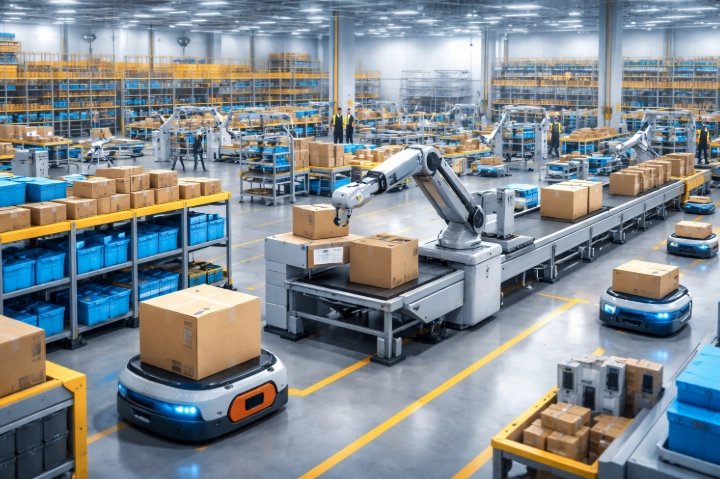
Modern fulfillment platforms replace fragmented workflows with centralized execution. Orders no longer need to be copied between systems, status updates no longer rely on human reminders, and inventory records do not drift across multiple tools.
A typical example is auto fulfillment, where orders placed in connected storefronts are automatically synchronized, queued, processed, and updated without manual handling. This service eliminates repetitive work such as exporting order lists, forwarding shipping details, or manually requesting tracking numbers. More importantly, it improves consistency as every order follows the same processing logic. Errors decrease not because staff work harder, but because the system enforces discipline.
This means that growth no longer multiplies workload linearly, and volume can rise while operational burden remains stable.
Why does fulfillment infrastructure directly affect your cost structure?
Cost is not only about the unit price per shipment, but also capital allocation.
How inventory externalization, pay-as-you-go warehousing, and dynamic logistics routing reshape cash flow and working capital pressure
Traditional models force you to commit capital early because it tends to purchase inventory, rent storage, and accept the risk of unsold stock. This ties cash to uncertain demand and reduces flexibility.
Third-party fulfillment systems restructure this dynamic. With global warehousing, inventory can be distributed closer to demand regions while remaining externally managed. You don’t require a large initial investment, but have a variable cost in terms of storage, picking, and shipping, which varies based on the actual demand rather than the forecasted value.
This shift contributes to reducing inventory risk, lowering capital requirements, and supporting the testing of products without committing large budgets. Over time, this financial structure allows for allocating more capital toward acquisition, branding, and product development instead of tying it up in stock.

How do third-party fulfillment services reduce operational risk rather than shifting it?
Outsourcing only has value when it reduces risk, not when it merely relocates it.
How quality inspection, order traceability, standardized packaging, and multi-channel logistics selection stabilize delivery outcomes across volatile environments
Professional fulfillment systems typically include structured processes, such as product inspection before storage, packaging standardization, and multiple logistics channel options. These are not cosmetic features, but determine whether problems are detected early or only after customer complaints arrive. Besides, it also determines whether exceptions are visible inside the system or hidden in external emails and whether disruptions in one shipping channel can be compensated for by alternatives.
Risk does not disappear, but it becomes measurable and manageable. However, a system that offers traceability and standardized operations gives you greater control than many in-house workflows, because you see what is happening, when it happens, and where corrective action is needed.
Why is fulfillment capability a growth multiplier rather than a backend utility?
The strongest fulfillment systems do not simply support growth, but promote growth.
How fulfillment elasticity enables rapid product testing, faster market response, and cross-border scaling without structural redesign
Modern dropshipping and fulfillment platforms have many strategic advantages—rapid testing and flexibility. Because you can list products without buying the inventory in advance, you are then able to test your categories quickly. In addition, if your logistics are already set up, entering new markets will not mean starting from the beginning.
This flexibility will change the growth strategy. Instead of asking “Can operations support this expansion?”, you begin to ask “Which opportunity should we pursue next?”
This is why many high-performing sellers rely on external fulfillment infrastructure even after reaching significant scale. It is not because they lack resources, but because the architecture itself supports faster iteration and safer experimentation.
How should you evaluate whether a third-party fulfillment system fits your business model?
Not related service strengthens every business. The decision must follow clear criteria.
How data visibility, process transparency, system integration, cost predictability, and long-term adaptability determine whether outsourcing strengthens or weakens your control
Before committing to any fulfillment partner, it is essential to evaluate the system:
- Can you see order status, inventory levels, and exceptions in real time?
- Does the system integrate cleanly with your storefronts and tools?
- Are processing rules standardized rather than dependent on individual operators?
- Is pricing transparent and predictable as volume scales?
- Can the system evolve as your business model changes?
Integration capability, process clarity, and operational structure are the key criteria for selecting suppliers and platforms, which can be applied in the fulfillment systems. When these elements are present, outsourcing increases control, instead of reducing it.
FAQs
Q1: Does using third-party fulfillment mean losing control over your operations?
A: Not when the system provides visibility and structured workflows. With dashboards, tracking, and standardized processes, control often improves compared to fragmented internal operations.
Q2: Is third-party fulfillment only suitable for small or early-stage sellers?
A: No. As volume grows, complexity grows faster than internal teams can handle without strong infrastructure. Larger operations often gain more from structured fulfillment systems.
Q3: How do you know if your fulfillment system is limiting your growth?
A: If new products, new markets, or new volumes of orders require constant human coordination, firefighting, or hiring simply to keep things stable, then the fulfillment architecture is a bottleneck.